
If you’ve ever been texting a friend, chatting in a gaming group, or scrolling through social media, you might have come across the abbreviation IGL. At first glance, it can feel confusing—especially if you’re not used to internet slang or gaming terms. Understanding these abbreviations is important because they often carry nuanced meanings that change depending on context.
In this article, we’ll explore what IGL means in text, how people use it in everyday chats and social media, and provide real-life examples to make it easy for beginners to grasp. By the end, you’ll have a clear understanding of IGL and how to use it naturally in conversations.
What Does IGL Mean in Text?
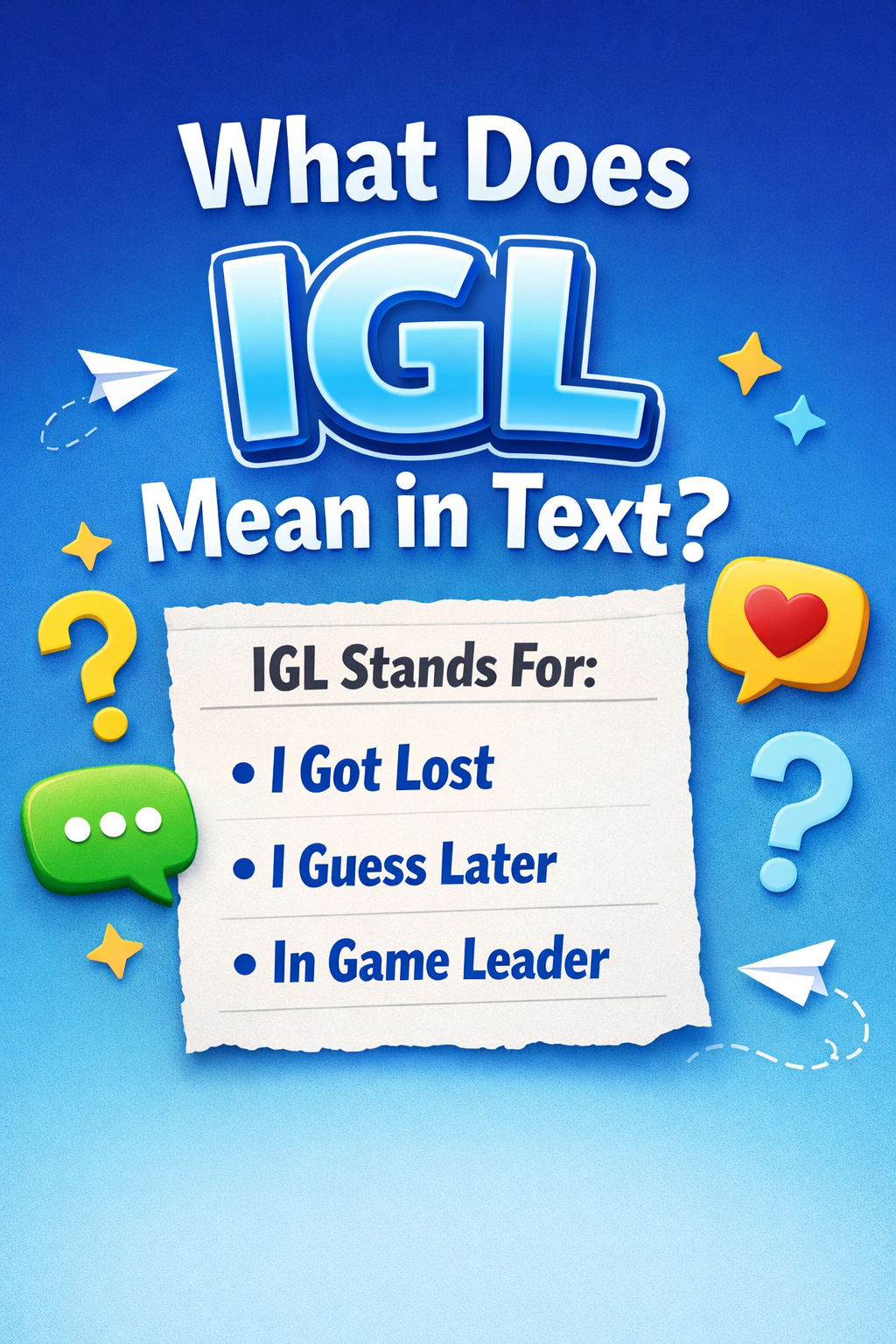
IGL primarily stands for “In-Game Leader.”
This term comes from the gaming community, especially in team-based online games like Valorant, Counter-Strike: Global Offensive, League of Legends, and Dota 2. The In-Game Leader is the player responsible for directing the team’s strategies, making calls, and guiding teammates during matches. Essentially, they’re the tactical brain of the team.
Outside of gaming, some people might also use IGL casually to mean “I guess like,” but this usage is much less common. In most texting and social media contexts, it’s safe to assume that IGL = In-Game Leader, especially if the conversation is about gaming.
Breaking Down the Gaming Meaning
In games, not every player has the same role. There are usually:
- DPS/Attackers: Focused on dealing damage or scoring points.
- Support/Healers: Help teammates survive or boost their abilities.
- IGL (In-Game Leader): Guides strategy, coordinates attacks, and decides when to push or retreat.
The IGL doesn’t always have the most kills or the flashiest gameplay, but their decisions often determine the team’s success. They are like the captain on a sports team, making calls that everyone follows to secure a win.
How IGL Is Used in Texting and Social Media
While originally a gaming term, IGL has expanded into casual texting, especially among younger audiences and gaming communities. People use it when talking about strategy, leadership, or even jokingly in everyday situations.
Example 1: Gaming Chat
Friend 1: “We keep losing because nobody follows the plan.”
Friend 2: “Yeah, we need a better IGL.”
Here, they are directly talking about needing a strong in-game leader to organize the team.
Example 2: Casual Text
Friend 1: “I told everyone what to do for the project presentation.”
Friend 2: “IGL, you’re basically running the team 😂”
In this case, IGL is used jokingly to refer to someone taking charge, similar to a leader in real life.
Example 3: Social Media Post
Caption on a gaming clip: “IGL making all the right calls, team finally wins 🏆”
Here, the post highlights the importance of the In-Game Leader in achieving success.
Why IGL Is Important in Gaming
Being an IGL is not just about giving orders. It requires:
- Quick Decision-Making – Games move fast, and the IGL must think ahead.
- Strong Communication – Clear calls prevent confusion.
- Game Knowledge – Knowing maps, enemy strategies, and team abilities is crucial.
- Leadership Skills – Keeping teammates focused and motivated.
A good IGL can turn an average team into a competitive one. That’s why the term has earned respect in gaming culture.
Variations and Related Slang
In online chats and gaming communities, IGL often appears with other abbreviations or slang:
- LFG – Looking for Group
- DPS – Damage Per Second (or main damage dealer in games)
- GG – Good Game
- AFK – Away From Keyboard
Sometimes, you might see phrases like:
“Need an IGL LFG” → Meaning: Looking for a team with a strong leader.
Misunderstandings About IGL
If you’re new to internet slang, it’s easy to misinterpret IGL. Here are a few common mistakes:
1. Thinking IGL Is About Skill Alone
IGL is about leadership and strategy, not just personal skill. You can be a top player but a poor IGL if you can’t coordinate the team.
2. Confusing It With Other Abbreviations
As mentioned, some people might use IGL to mean “I guess like,” especially in casual text. Context is key.
3. Assuming Only Gamers Use It
While rooted in gaming, casual users now sometimes use IGL in joking contexts outside of games to describe someone taking charge.
How to Use IGL in Conversations
Here are tips for using IGL naturally:
- Gaming Context – Perfect for team chats, forums, or posts.
Example: “We need a new IGL, our current one keeps panicking.” - Joking Context – Use it playfully for someone taking charge.
Example: “IGL, you organized our group outing better than I expected 😂” - Social Media – Commenting on posts or clips.
Example: “IGL knows exactly what they’re doing, team finally wins!”
IGL and Teamwork
The concept of an IGL emphasizes teamwork. Even the best player can’t win alone. An IGL coordinates:
- Roles – Who attacks, who defends.
- Timing – When to push objectives or retreat.
- Communication – Sharing enemy positions or strategies.
This is why online communities respect skilled IGLs—they make the game better for everyone.
IGL in Esports
In professional esports, the IGL role is taken very seriously. Teams often designate one player as IGL for tournaments. Their decisions impact:
- Match outcomes
- Team dynamics
- Training routines
Professional IGLs often study opponents, watch game replays, and practice team coordination for hours daily. They are leaders both in-game and sometimes in strategy discussions off the screen.
Using IGL Outside Gaming
Interestingly, the term has crossed over into general texting culture. People may refer to someone as an IGL in non-gaming contexts when they take charge of a group project, family plan, or friend meetup.
Example:
Friend 1: “I scheduled everyone’s shifts for the weekend.”
Friend 2: “IGL vibes 😎”
Here, it’s a humorous way to recognize leadership.
Tone and Emoji Usage
When texting or posting, adding emojis can help convey tone:
- IGL 😎 – Cool leader vibes
- IGL 😂 – Playful or joking
- IGL 😭 – Dramatic admiration
Tone matters because plain text might be interpreted differently depending on your audience.
Common Questions About IGL
1. Is IGL Only Used in Competitive Games?
Mostly yes, but casual gamers and social media users also adopt it.
2. Can I Use IGL in Formal Texts?
Not recommended. It’s slang, so it works best in casual chats.
3. Is Being an IGL Hard?
Yes, it requires quick thinking, leadership, and communication skills. Not every skilled player can be a good IGL.
Real-Life Examples in Everyday Language
Even outside gaming, IGL can be used humorously or casually:
Example 1:
Friend: “I coordinated everyone’s lunch order.”
You: “IGL energy for sure 😂”
Example 2:
Friend: “Planned the road trip route perfectly.”
You: “IGL, you’re basically our navigator 😎”
Example 3:
Friend: “Directed the charity event smoothly.”
You: “IGL vibes, respect 👏”
It’s a playful nod to leadership, showing how gaming slang influences everyday conversations.
Why Knowing IGL Matters
Understanding abbreviations like IGL is part of keeping up with digital communication. It helps you:
- Understand online chats and gaming forums
- Join conversations confidently
- Recognize tone and context
- Avoid misunderstandings
Even if you’re not a gamer, recognizing these terms can make texting and social media interaction easier.
Summary
IGL stands for In-Game Leader, a term rooted in gaming but now used in casual text and social media to refer to someone taking charge. It represents leadership, strategy, and teamwork, whether in games or jokingly in real life.
Key takeaways:
- Mostly used in gaming contexts
- Can be playful outside games
- Tone and emojis affect meaning
- Misunderstanding is easy without context
By understanding IGL, you’ll navigate gaming chats, social media posts, and casual texting more confidently.
So next time someone calls you an IGL, whether seriously or jokingly, you’ll know they’re recognizing your leadership and strategic vibes—online or off.
Discover More Post
Best Apple Puns for Daily Smiles 2026 – Styled By Vibe –
Hilarious Hippo Puns Jokes That Will Make You Laugh 2026