
If you’ve been scrolling through messages, social media posts, or group chats, you might have seen the abbreviation “MIA” and wondered what it actually means. Internet slang can feel like a secret language, and new acronyms pop up all the time. Understanding them helps you keep up with conversations and communicate naturally online.
In this article, we’ll explain what “MIA” means in chat, how people use it, and give real-life examples. We’ll also cover when it’s appropriate to use it, how tone changes its meaning, and why it has become so popular in digital communication.
What Does MIA Mean in Chat?
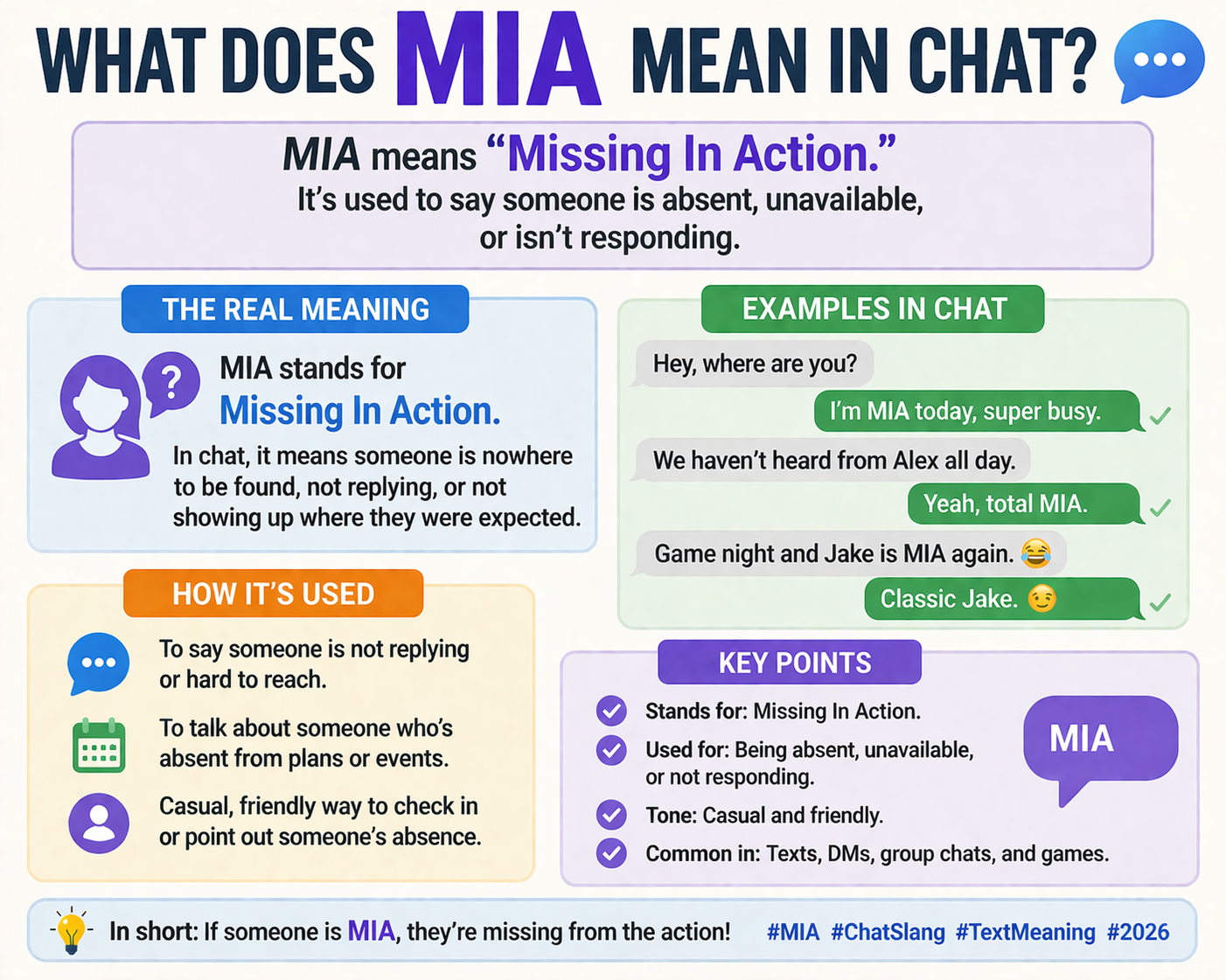
“MIA” stands for “Missing In Action.”
Originally, the term came from the military to describe soldiers who were unaccounted for during combat. Over time, it has been adopted into everyday language, especially online. In chat, it usually means:
- Someone hasn’t been active
- A person hasn’t replied in a while
- They are absent from social interactions
For example, if your friend hasn’t replied to messages for a few days, you might say, “You’ve been MIA!”
Simple Explanation of MIA
At its core, “MIA” is a friendly way to notice someone’s absence. It’s casual, short, and easy to use in a text or social media comment.
You can use it when:
- A friend hasn’t responded to messages
- Someone hasn’t posted on social media in a while
- A teammate misses an online meeting or group chat
It’s a way of saying, “Hey, I haven’t seen you around!”
How MIA Is Used in Chat
Here are some common ways “MIA” appears in conversations:
Example 1: Casual Texting
Friend: “Sorry I haven’t replied.”
You: “No worries! You’ve been MIA 😅”
Example 2: Social Media Comment
Post: “Finally back after a long break!”
Comment: “We missed you! You were MIA 👀”
Example 3: Group Chat
Friend: “Sorry, I couldn’t make it to the game.”
You: “You’ve been MIA all week! We missed you.”
Example 4: Work Chat (Casual)
Colleague: “Sorry for missing the meeting.”
You: “You were MIA yesterday. All good!”
Tone Matters With MIA
The meaning of “MIA” can change depending on tone and context. Emojis, punctuation, and the relationship between people can make a big difference.
- Friendly/Playful: “You’ve been MIA 😄”
- Slightly Accusing: “Where have you been? MIA…”
- Sarcastic: “Oh, you decided to show up. MIA as usual 🙄”
It’s important to match the tone to the situation, especially in digital conversations where it’s easy to misinterpret messages.
Is MIA Always Negative?
Not at all. While it points out absence, “MIA” can be:
- Neutral: Simply stating someone hasn’t been around
- Positive: Playfully noting someone’s return
- Negative: Expressing mild frustration or concern
For instance, in a chat with a close friend, saying “You’ve been MIA!” is usually playful. In a professional setting, it could sound like gentle criticism if not phrased carefully.
MIA on Social Media
“MIA” is commonly used on platforms like Instagram, TikTok, and Snapchat. It’s often a reaction to someone’s absence or return.
On Instagram
People comment on posts when someone hasn’t shared updates for a while.
Example:
“Wow, long time no see! You were MIA 😍”
On TikTok
Used in captions or comments when someone disappears for weeks.
Example:
“Finally posting again! You were MIA, glad you’re back!”
On Snapchat
“Streaks” and stories make MIA a fun way to notice absence.
Example:
“Been MIA all week! Where have you been?”
Why People Use MIA Instead of Full Phrases
“MIA” is short, easy, and fits the fast pace of online communication. Typing “missing in action” every time would be too formal and slow. Slang like “MIA” makes conversations casual, expressive, and social-media friendly.
Variations and Similar Slang
“MIA” has a few close relatives in digital slang:
- Ghosting: When someone deliberately avoids replying
- AFK (Away From Keyboard): Usually used in gaming
- Offline: Simply not online
- Dormant: Less common, often used in professional or community contexts
While these terms overlap, “MIA” is flexible because it can be playful, serious, or neutral depending on tone.
When Should You Use MIA?
“MIA” works best in casual conversations.
Appropriate Situations
- Texting friends
- Posting on social media
- Chatting in informal group chats
Situations to Avoid
- Formal emails or work communications without casual context
- Serious situations involving emotional or urgent matters
- Talking to someone you don’t know well
Using slang in the wrong setting can make you sound careless or rude.
How to Respond When Someone Says You Were MIA
If someone points out that you’ve been MIA, your reply depends on your relationship and situation.
- Friendly response: “Haha yeah, been busy 😅”
- Playful response: “Missed me? 😏”
- Casual acknowledgment: “Yep, back now!”
The key is to keep it light and conversational.
Common Misunderstandings
1. Thinking MIA is a Criticism
Not necessarily. Most people use it playfully. Tone and emojis clarify intent.
2. Confusing with Ghosting
“MIA” usually implies temporary absence, while ghosting is intentional avoidance.
3. Misreading Context
Without context, it can be unclear if the person is joking or serious. Emojis often help.
Real-Life Conversation Examples
Scenario 1: Friend texting after a break
Friend: “Hey, just got back from vacation!”
You: “You were MIA! How was it?”
Scenario 2: Group chat joke
Friend: “I missed the party 😅”
You: “We noticed! MIA all night 😎”
Scenario 3: Social media return
Post: “Finally posting again”
Comment: “You’ve been MIA! Welcome back 😍”
Scenario 4: Work setting (casual)
Colleague: “Sorry I missed the team call.”
You: “You were MIA yesterday, hope everything’s okay!”
Cultural Impact of Slang Like MIA
Abbreviations like “MIA” reflect how digital communication has evolved:
- Short messages are preferred
- Online presence matters socially
- Emojis and tone are essential to convey emotion
It also shows how language adapts from formal usage (military) to everyday chat.
Tips for Using MIA Naturally
To use “MIA” effectively:
- Use it casually, not formally
- Pair with emojis for tone
- Don’t overuse it
- Consider your audience
Think of it as a quick, friendly way to comment on someone’s absence.
MIA in 2026
Even as new slang emerges, “MIA” remains widely recognized. Its simplicity and versatility make it timeless in online and texting culture. Whether chatting with friends, commenting on social media, or teasing a colleague lightly, “MIA” is still relevant.
Final Thoughts
“MIA” stands for “Missing In Action,” but in chat, it’s much more than that. It’s a casual way to notice someone’s absence, express mild surprise, or playfully point out that someone hasn’t been around. Its meaning depends heavily on tone, emojis, and context, making it versatile in everyday digital communication.
Now that you know how to use it, you can join chats and social media conversations with confidence. The next time a friend disappears for a few days, you’ll know exactly what to say: “You were MIA!”
Discover More Post
Top Trending Blueberry Puns in 2026 – Styled By Vibe –
Clever Elephant Puns That Make You Smile 2026