
If you’ve ever been texting, scrolling through social media, or checking your emails and saw “TBD,” you might have wondered what it actually means. Unlike casual slang like “LOL” or “BRB,” TBD isn’t always playful—it’s often used in professional or casual settings to indicate something that isn’t decided yet. Still, it has made its way into everyday text messages, group chats, and online discussions.
In this guide, we’ll explore the meaning of TBD, how it’s used in texts and social media, and when it’s appropriate to use it. Everything is explained in simple, clear language so that even beginners can understand and use it naturally.
What Does TBD Mean in Text?
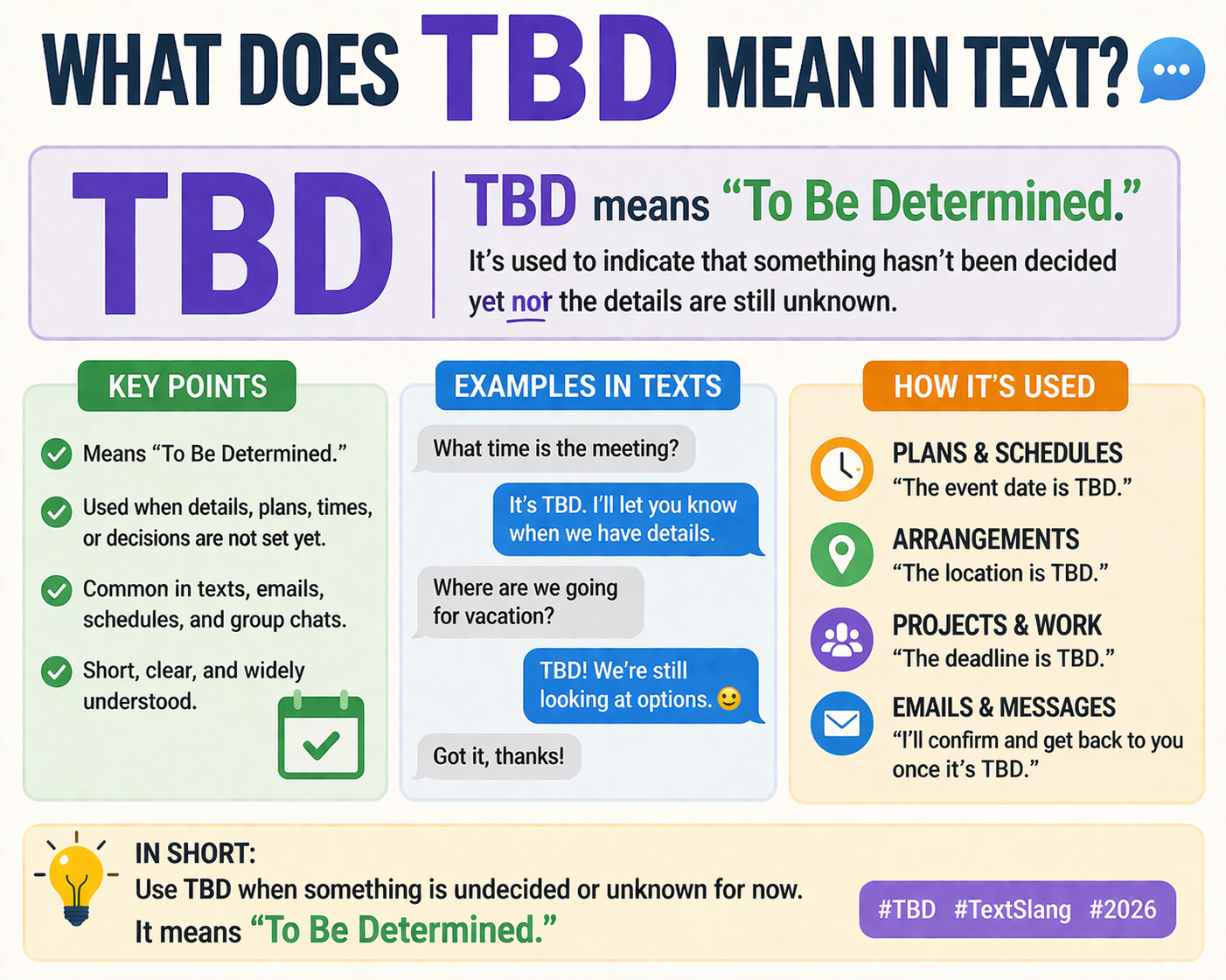
TBD stands for “To Be Determined.”
It’s used when a decision hasn’t been made yet or when details are not finalized. For example, if someone asks about the time of a meeting or an event, and the organizer hasn’t set it, they might reply with “TBD.”
It’s a neutral term—it doesn’t show excitement, disappointment, or urgency on its own. It simply communicates uncertainty or that something is pending.
Simple Explanation of TBD
Think of TBD as a placeholder.
- When you don’t know the exact details yet, you write TBD.
- It signals that information will be provided later.
- It’s often used for times, dates, locations, prices, or even roles in projects.
For example:
- Event Date: TBD
- Meeting Location: TBD
- Project Lead: TBD
In text messages, TBD works similarly but can also be used informally to indicate that you haven’t decided on something yet.
How TBD Is Used in Texting
Here are a few examples of how people might use TBD in everyday texting:
Example 1: Planning a Hangout
Friend: “What time should we meet tomorrow?”
You: “TBD, still figuring it out.”
👉 Meaning: You haven’t decided yet but will let them know.
Example 2: Discussing Weekend Plans
Friend: “Where are we going this weekend?”
You: “TBD. Any ideas?”
👉 Meaning: The location hasn’t been decided yet; you’re open to suggestions.
Example 3: Casual Work Chat
Colleague: “Who’s presenting in the meeting?”
You: “TBD. I’ll check with the manager.”
👉 Meaning: The presenter hasn’t been assigned yet.
TBD Meaning in Social Media
TBD isn’t just for professional or casual texts—it’s also common on social media. People use it in posts, stories, and comments when details about an upcoming event, content, or announcement aren’t finalized.
On Instagram
Example:
“New video coming soon… date TBD!”
On Twitter
Example:
“Concert tickets for the summer tour are TBD. Stay tuned.”
On Facebook
Example:
“Family picnic this weekend, location TBD.”
In all cases, TBD communicates that more information is coming later.
Why People Use TBD Instead of Full Sentences
TBD is short, quick, and universally understood. It’s perfect when you want to:
- Save time
- Avoid writing full explanations
- Keep your message clear and concise
It’s especially useful in fast-paced online communication where people prefer short, readable messages.
Variations and Similar Terms
While TBD is the most common abbreviation, a few similar terms or variations can be used depending on the context:
1. TBA (To Be Announced)
- Often used for events or public information that will be revealed later.
- Example: “Special guest: TBA.”
2. TBC (To Be Confirmed)
- Similar to TBD but emphasizes that the information exists and just needs verification.
- Example: “Dinner location: TBC.”
3. Pending
- A more general term indicating something is not finalized.
- Example: “Your request is pending.”
Each has a slightly different nuance but all indicate uncertainty or a future update.
When Should You Use TBD?
TBD works in casual, semi-formal, and professional communication. Here’s a quick breakdown:
Good Situations to Use TBD
- Group chats or casual texting
- Work or school projects
- Event planning
- Social media updates
Situations to Avoid TBD
- Personal conversations that need emotional clarity
- Messages where the other person needs immediate answers
- Situations where TBD could sound vague or dismissive
Using TBD in the wrong context can make you seem unresponsive or unclear, so it’s important to pair it with context or follow-up information.
How Tone Changes TBD
The meaning of TBD can shift slightly depending on how you write it:
- “TBD 🙂” – Friendly, casual uncertainty
- “TBD…” – Hesitant or uncertain
- “TBD 😬” – Slight stress or worry about the pending detail
- “TBD!” – Excitement about upcoming information
Emojis and punctuation help convey your tone and make TBD more expressive.
Common Misunderstandings
1. Thinking TBD Means “I Don’t Care”
Some people assume that TBD signals indifference. It doesn’t—it just means the details aren’t decided yet.
2. Confusing TBD With TBA or TBC
- TBD = To Be Determined (decided later)
- TBA = To Be Announced (shared publicly later)
- TBC = To Be Confirmed (needs verification)
3. Using TBD in Sensitive Contexts
If someone is asking for a definitive answer about an important matter, TBD may seem careless. Always provide context or a timeline when necessary.
Real-Life Examples of TBD
Here are some realistic situations to help you understand usage:
Scenario 1: Party Planning
Friend: “What’s the address for the party?”
You: “TBD, I’ll send it once it’s finalized.”
Scenario 2: Work Project
Manager: “When is the presentation scheduled?”
You: “TBD, we’re waiting on the client’s availability.”
Scenario 3: Event Announcement
Post: “Annual festival coming soon, date TBD!”
Scenario 4: Weekend Plans
Friend: “Which movie are we watching?”
You: “TBD. Any suggestions?”
TBD in Professional Emails
TBD is widely accepted in professional emails, especially when planning meetings, events, or projects.
- Example Email:
“Dear team, the next quarterly meeting is TBD. We’ll confirm the date by Friday.”
It’s polite, professional, and indicates that you’ll provide more information soon.
Tips for Using TBD Naturally
If you want to use TBD naturally in texting or online communication:
- Provide context: Don’t just say TBD—explain what’s pending.
- Follow up: Share updates as soon as possible.
- Use emojis for casual texts: They add tone.
- Match your audience: Professional vs casual tone matters.
Cultural Impact of TBD
TBD shows how language evolves in the digital age. People prefer:
- Short, clear communication
- Flexible phrases that work in many contexts
- Quick updates without long explanations
Abbreviations like TBD reflect a shift toward efficiency and adaptability in communication.
Final Thoughts
TBD—short for To Be Determined—is a simple yet versatile term. It communicates that something is undecided but will be resolved later. Whether you’re texting friends, posting on social media, or sending work emails, TBD is a useful tool to convey uncertainty or pending information clearly and efficiently.
The key to using TBD correctly is context. Pair it with a brief explanation, emoji, or timeline to make your message natural and understandable.
Now that you know what TBD means and how to use it, you can confidently include it in your messages, social media posts, and emails without confusion.
It’s one of those small abbreviations that make modern communication faster, clearer, and more efficient—perfect for today’s fast-paced digital world.
Discover More Post
Clever Lizard Puns That Make You Smile 2026
Funny Clever and Sweet Berry Puns 2026 – Styled By Vibe –