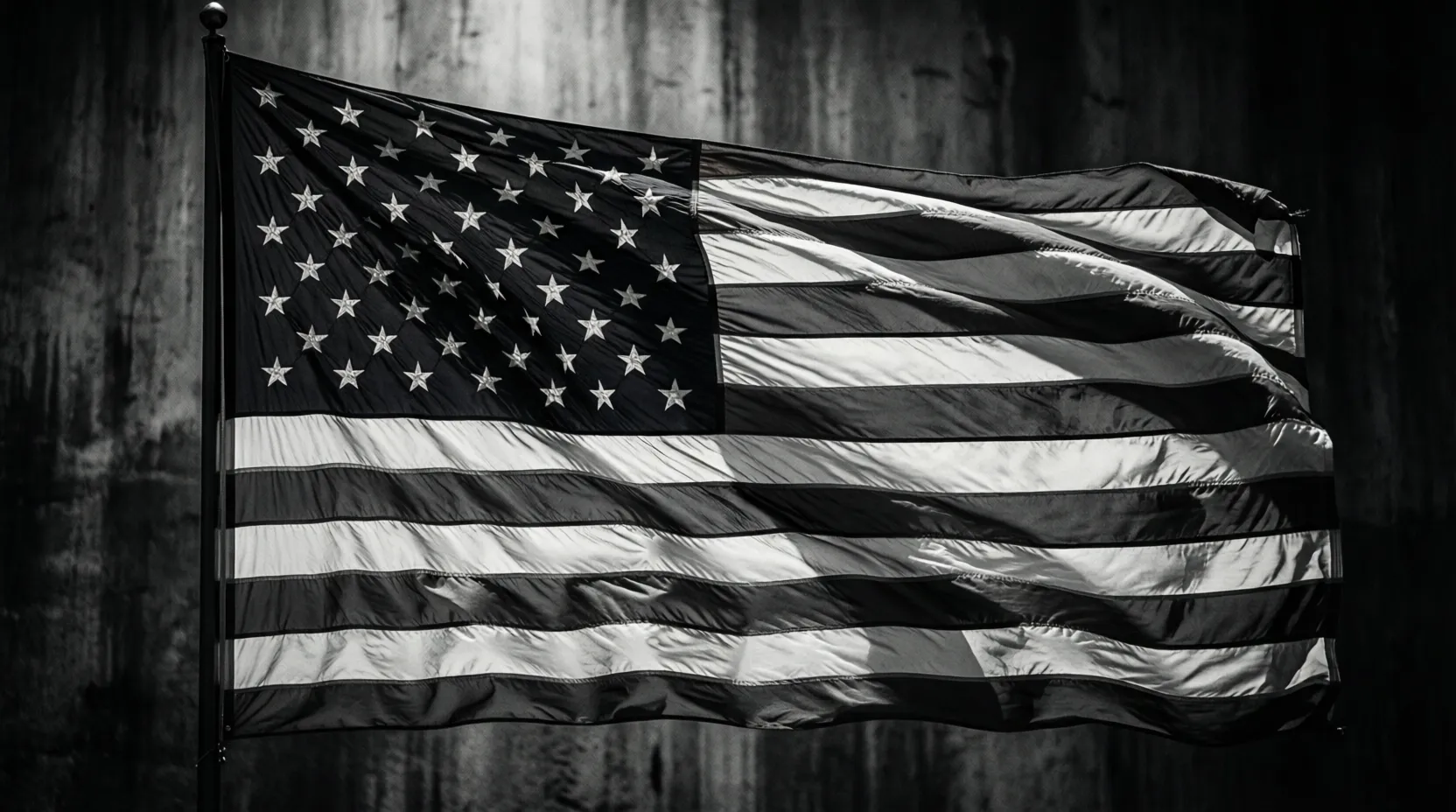

Many people have seen the black American flag and wondered what it represents.
If on social media, in protests, on clothing, or even in art, this flag carries meanings that are often misunderstood or oversimplified. Understanding its symbolism helps make sense of cultural conversations happening today.
In this guide, you’ll discover:
- The core meanings of the black American flag
- Its historical and cultural context
- How it’s used today
- Misunderstandings and sensitive interpretations
- Ways to explain it to others
Definition & Core Meaning
The black American flag is essentially a version of the U.S. flag where black replaces the traditional red, white, and blue colors. Some versions are completely black, while others include black-and-white stripes or thin colored lines.
Core meanings include:
- Resistance and protest — Expressing disagreement with injustice or the status quo.
- Mourning or grief — Honoring loss or recognizing historical struggles.
- Unity and strength — Celebrating resilience, particularly in Black communities.
- Defiance or radical change — Representing a refusal to accept certain norms.
- Historical martial meaning — Traditionally, black flags indicated “no surrender” in battle.
Examples:
- “The black flag at the march symbolized the community’s resilience.”
- “Some use it to express frustration with systemic inequality.”
Historical & Cultural Background
Origins of Black Flags
Black flags have been used for centuries in military history to signal defiance, mourning, or a “no quarter” declaration in battles. They were a symbol of seriousness and finality long before the modern American flag was created.
Civil Rights & Cultural Significance
The black American flag has become associated with movements addressing racial inequality, civil rights, and cultural pride. It has appeared in protests, artistic works, and public demonstrations as a way to express resistance or remembrance.
Black American Heritage Flag
It’s important to distinguish the black American flag from the Black American Heritage Flag. The Heritage Flag is designed with black, red, and gold stripes and was created to celebrate Black identity and history. It symbolizes pride, struggle, and hope for the future.
Emotional & Psychological Meaning
The black American flag evokes deep feelings.
Identity & Memory
It can reflect historical trauma, ongoing struggles for justice, and pride in community resilience.
Empowerment & Reclamation
Artists and activists often use it to reclaim narratives and assert agency. It’s a symbol of both grief and empowerment, depending on who displays it.
Different Contexts & Use Cases
Protests and Advocacy
Used to highlight social and racial injustice. It’s a visible signal of solidarity and resistance.
Art and Culture
Appears in photography, music, and public art to explore identity and challenge traditional symbols.
Fashion and Merchandise
Sometimes it’s simply a stylistic choice on clothing or accessories, though interpretations can vary.
Online and Memes
Used in social media as a metaphor or for aesthetic appeal, sometimes detached from serious meaning.
Hidden, Sensitive, or Misunderstood Meanings
- Misconceptions: Some assume it represents hatred toward America or violence. While historically black flags had martial meanings, most modern uses focus on protest, identity, or mourning.
- Flag etiquette: Though altering the U.S. flag is legal, some view it as disrespectful. Context and intent matter greatly.
Comparison of Similar Flags
| Flag Type | Meaning | Context |
|---|---|---|
| Black American Flag | Resistance, protest, mourning | Social activism |
| Black and White U.S. Flag | Distress, artistic expression | Public demonstrations |
| Black American Heritage Flag | Cultural pride, identity | Black heritage celebration |
| Thin Blue Line Flag | Law enforcement support | Police solidarity (sometimes controversial) |
| Pan-African Flag | Unity across the African diaspora | Cultural pride and history |
Key Insight: Each flag carries distinct symbolism, and context determines how it’s interpreted.
Popular Types / Variations
- All-black U.S. layout — Protest or defiance.
- Black-and-white stripes with stars — Symbolizes civil unrest or social critique.
- Black with thin colored line — Shows support for specific groups (like police).
- Heritage flags — Celebrates Black culture and history.
- Artistic interpretations — Challenges traditional symbols.
- Solid black without stars — Aesthetic or protest statement.
- Upside-down black/white flag — Sign of distress or protest.
- Fashion-driven versions — Trendy style without political meaning.
- Historical-inspired flags — References past struggles.
- Memorial or tribute flags — Honors lives lost or remembered.
How to Respond When Asked About It
Casual:
- “It’s a version of the American flag used to make a statement.”
Meaningful:
- “For many, it represents struggle, resilience, or cultural pride.”
Thoughtful:
- “It can mean protest, mourning, or identity depending on context.”
Private / Neutral:
- “Its meaning changes with who displays it and why.”
Regional & Cultural Differences
Western (U.S. & Europe)
Primarily used in protest culture or artistic expression.
African Diaspora
Linked to identity, liberation, and pride across global Black communities.
Global Art & Media
Used internationally in creative works exploring identity, struggle, or societal commentary.
FAQs
1. Is the black American flag official?
No, it’s a symbolic variation, not a recognized U.S. flag.
2. Does it mean hate or violence?
Not inherently — most uses are about protest, identity, or mourning.
3. Is it tied to Black Lives Matter?
It has been used in that context to signify resistance to racial injustice.
4. How is it different from the Heritage flag?
The Heritage flag celebrates Black identity specifically, while the black American flag can represent protest or mourning.
5. Does flipping it upside-down change meaning?
Yes, it typically signals distress or protest.
6. Is displaying it disrespectful to the U.S.?
Opinions vary; some see it as protest, others as disrespect.
7. Can anyone display it?
Yes, but meaning changes depending on context and audience.
Conclusion
The black American flag is a complex, meaningful symbol representing protest, grief, identity, resilience, and cultural pride. Its interpretation depends on context, intent, and audience.
Understanding its layers allows you to engage thoughtfully, whether in conversation, art, or activism. More than just a flag, it’s a conversation starter about history, identity, and hope.
See also: African American Heritage Flag meaning and history
Discover More Post
105+ Funny Toaster Puns & Jokes One Liner (2026)
135+ Funny Mirror Puns & Jokes One Liner (2025)
165+ Funny Dolphin Puns & Jokes One Liner (2026)