
If you’ve ever been texting or scrolling through social media and stumbled upon “JW,” you might have paused and wondered what it means. Internet slang evolves rapidly, and new abbreviations pop up all the time. Some are widely understood, while others can leave even experienced texters scratching their heads.
“JW” is one of those small but versatile terms that can appear in conversations, comments, or direct messages—and knowing its meaning can help you communicate more naturally online.
In this guide, we’ll explain exactly what “JW” means in text, show how people use it, give real examples, and even discuss some nuances. This article is written in simple, conversational English, so even if you’re new to texting slang, it will be easy to follow.
What Does JW Mean in Text?
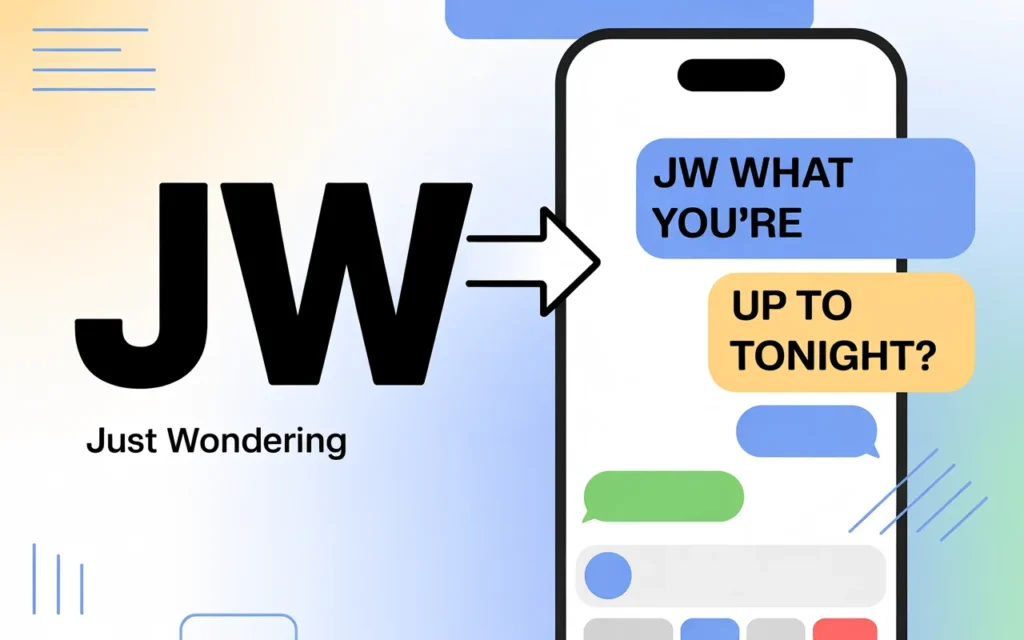
“JW” is short for “Just Wondering.”
It’s commonly used when someone is curious about something but doesn’t want to sound demanding or pushy. Essentially, it softens a question or request. Instead of directly asking, “Did you finish the project?” a person might text, “JW if you finished the project?” This makes the message feel lighter, polite, and casual.
Why People Use JW
There are several reasons “JW” has become popular in texting and online communication:
- Politeness – It makes questions sound less abrupt.
- Brevity – Shortens the sentence for faster typing.
- Casual tone – Keeps the conversation friendly and informal.
- Curiosity – Lets someone express interest without pressure.
In other words, “JW” is a small abbreviation with a big effect on tone.
How to Use JW in Texting
Using “JW” is simple, but context matters. Here are some common ways it appears in conversations.
Example 1: Asking About Plans
You: “JW if you’re coming to the party tonight?”
Friend: “Yeah, I’ll be there!”
Here, “JW” signals that you’re curious but not demanding an answer.
Example 2: Checking Availability
You: “JW if you’re free to talk later.”
Friend: “I’m free around 6 PM.”
It makes the question softer and friendlier.
Example 3: Online Discussions
Comment on a post: “JW how long it took to make this cake?”
Here, “JW” shows curiosity without seeming intrusive.
Example 4: Professional Setting (Casual Emails)
Sometimes “JW” is used in informal workplace chats:
You: “JW if the report is ready for review.”
While it’s casual, it keeps the tone polite and approachable.
JW Meaning on Social Media
“JW” is not limited to one platform. It shows up everywhere—from Instagram comments to TikTok replies to Snapchat chats. Here’s how people typically use it:
On Instagram
- Commenting on posts or stories to show curiosity.
- Example: “JW where you got that jacket? Looks amazing!”
On TikTok
- Asking light questions in comments.
- Example: “JW how you edited this video so smoothly?”
On Snapchat
- Replying to snaps in a casual, friendly way.
- Example: “JW if you’re still at the cafe?”
Across platforms, “JW” keeps questions casual and non-intrusive.
Tone Matters With JW
The tone of “JW” can change the meaning slightly. Here’s how:
- Friendly: “JW if you want to grab lunch?”
- Curious: “JW how you learned that trick?”
- Subtle pressure: “JW if you finished the task yet?”
Notice how the tone depends on context, punctuation, and your relationship with the recipient.
Common Variations and Alternatives
While “JW” is widely recognized, there are a few alternatives you might see:
- Just Curious – Slightly more informal than “JW.”
- Wondering – Can be used alone, e.g., “Wondering if you’re free tonight.”
- Curious – Often paired with emojis for light-hearted questions.
All of these convey curiosity without being pushy.
Situations to Use JW
“JW” works best in informal or semi-formal contexts. Here’s a guide:
Good Situations
- Casual texts with friends or family
- Social media comments
- Light workplace chats
- Group messaging
Situations to Avoid
- Formal emails
- Serious or urgent requests
- Sensitive conversations
Using “JW” in the wrong context can make you seem too casual or dismissive.
Real-Life Conversation Examples
Here are realistic examples to show “JW” in action.
Scenario 1: Weekend Plans
You: “JW if you’re free this weekend?”
Friend: “I’m free Saturday afternoon, want to meet up?”
Scenario 2: Shopping
You: “JW if that store has the blue shoes in stock?”
Friend: “Yes, they do!”
Scenario 3: Online Gaming
You: “JW if you want to join our game tonight?”
Friend: “Sure, I’m in.”
Scenario 4: School or College
You: “JW if the professor uploaded the notes yet?”
Classmate: “Not yet, maybe later today.”
Scenario 5: Social Media Comment
Post: “Made a new dessert recipe!”
Comment: “JW what ingredients you used 😋”
In every example, “JW” keeps the question light and friendly.
How to Reply When Someone Uses JW
If someone texts you with “JW,” your response can be casual, informative, or playful:
- Direct answer: “Yes, I’m free.”
- Friendly reply: “Not yet, but I’ll let you know soon!”
- Playful: “Why, curious much? 😄”
Responding naturally keeps the conversation smooth and friendly.
Why JW Is Useful in Modern Communication
“JW” reflects how texting culture has evolved:
- Efficiency – Saves time by shortening phrases.
- Tone control – Lets you ask questions without sounding rude.
- Flexibility – Works in private chats and public comments.
- Friendly vibe – Makes digital communication feel more personal.
It’s a perfect example of how small abbreviations can make online conversations more natural.
Misunderstandings to Avoid
While “JW” is simple, some people misunderstand it:
1. Confusing JW With Other Acronyms
“JW” could also stand for “Jehovah’s Witness” in religious contexts. Pay attention to context.
2. Overusing JW
Sending every question with “JW” can seem unnatural or forced.
3. Using JW in Serious Situations
For important or formal inquiries, full sentences without abbreviations are better.
JW Across Age Groups
- Teens and young adults: Use it frequently in casual chats.
- Millennials: Often use it online or in friendly emails.
- Older adults: May be less familiar but can understand in context.
Its popularity is growing because it’s easy to type and universally understood in casual online spaces.
Popular Examples of JW on Social Media
- Instagram Story Reply: “JW what filter you used?”
- TikTok Comment: “JW how long it took to film this!”
- Snapchat Chat: “JW if you made it home safely?”
In each case, “JW” signals curiosity politely.
Tips for Using JW Naturally
If you want to sound natural and approachable while using “JW”:
- Keep it casual – Don’t force it into formal messages.
- Use emojis – Helps clarify tone.
- Match the context – Use it when asking simple questions.
- Don’t overuse – Too many “JW” messages can seem repetitive.
- Combine with other polite phrases – “JW if you might be interested” is friendly and soft.
Final Thoughts
“JW” is a small, versatile abbreviation that makes asking questions online simpler, quicker, and friendlier. Standing for “Just Wondering,” it lets you express curiosity without sounding pushy or demanding.
From texting friends to commenting on social media, “JW” fits naturally into casual conversations. Remember to consider context, tone, and your relationship with the person you’re messaging. When used correctly, it can make your digital communication smoother, more polite, and more approachable.
Next time you see “JW” in a message or post, you’ll know exactly what it means—and you’ll be ready to use it yourself without hesitation.
Discover More Post
What Does LYLYK Mean in Text Real Meaning Examples 2026
What Does IKR Mean in Text Real Meaning Examples 2026