
If you’ve ever been reading a message, email, or social media post and stumbled across “TBD,” you might have paused and wondered, “What does this mean?” Don’t worry—you’re not alone. Internet slang and abbreviations move fast, and even simple three-letter acronyms can be confusing if you’re not familiar with them.
In this article, we’ll explain what “TBD” means in text, how it’s used in everyday communication, and how to interpret it in different contexts. Whether you’re texting friends, reading emails, or scrolling through social media, this guide will help you understand “TBD” like a pro.
What TBD Means in Text
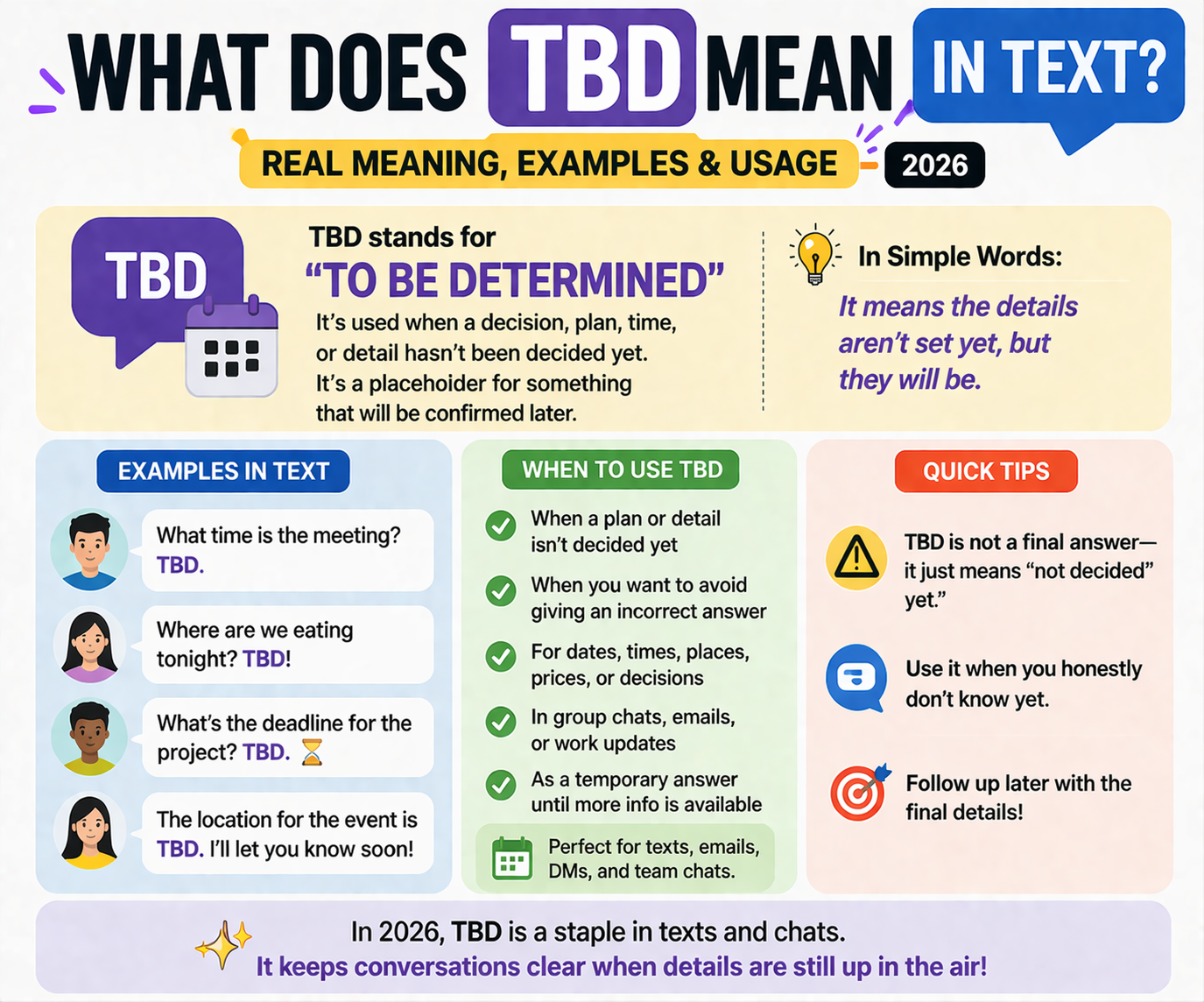
“TBD” stands for “To Be Determined.”
It’s a way to indicate that something hasn’t been decided yet. People use it in messages, posts, and even official documents to show that details will be provided later.
The phrase is simple, but it’s flexible. Depending on where and how it’s used, “TBD” can convey:
- Uncertainty about plans
- Flexibility for scheduling
- Upcoming decisions that haven’t been made
A Simple Explanation
Think of “TBD” as a placeholder.
When someone doesn’t know the exact information yet, they write “TBD” instead of leaving it blank. It tells the reader:
“We’ll figure this out later, but I want you to know it’s coming.”
It’s especially common in situations like events, meetings, and plans.
How TBD Is Used in Texting
“TBD” isn’t just for formal emails. People also use it in casual texting, especially when discussing plans.
Example 1: Plans with Friends
Friend: “Are we meeting for dinner on Friday?”
You: “Time is TBD, I’ll confirm later.”
Here, you’re saying that the exact time hasn’t been decided yet, but you’ll let them know.
Example 2: Social Events
Friend: “Where should we go for the party?”
You: “Venue TBD 😅”
You’re telling them that the location is still undecided. Adding an emoji keeps it light and casual.
Example 3: Work or School Projects
Coworker: “When is the project due?”
You: “Deadline TBD, waiting for approval.”
In professional or academic settings, “TBD” signals that the timing is pending.
Why People Use TBD Instead of Writing Full Words
The main reason is convenience.
- It’s shorter than writing “to be determined.”
- It saves time in text and digital communication.
- It keeps messages clean and professional when needed.
Using “TBD” is also versatile. You can use it in formal emails, casual group chats, or social media updates without changing your wording.
TBD on Social Media
“TBD” has become popular on social media platforms, especially when people share events, announcements, or tentative plans.
On Instagram
People might post about an upcoming event:
“Our next meetup is TBD—stay tuned!”
This keeps followers informed while showing that details are coming soon.
On TikTok
“TBD” appears in captions or comments when creators hint at future content:
“Next video theme is TBD 😎”
Fans understand that the creator hasn’t decided yet but will announce it soon.
On Twitter/X
Users often use “TBD” in threads discussing schedules or releases:
“Concert date TBD, more info next week.”
This keeps the audience engaged and curious.
Different Contexts for TBD
Although “TBD” usually means “to be determined,” the context can slightly change how it’s interpreted.
1. Business and Work
In work emails or project plans, “TBD” shows that something is pending approval or not yet finalized.
Example:
“Meeting location TBD until we hear back from management.”
2. Social Plans
Among friends, “TBD” can feel casual and informal. It simply means “we don’t know yet.”
Example:
“Weekend getaway location TBD. Suggestions?”
3. Events and Announcements
For events, “TBD” signals that the date, time, or location is not yet set.
Example:
“Charity fundraiser TBD, check our page for updates.”
Common Misunderstandings
1. Thinking TBD Means “Cancelled”
Some people confuse TBD with cancellation. It doesn’t. TBD always means undecided or pending.
2. Using TBD in the Wrong Context
If you use TBD for a personal commitment without clarification, someone might get confused. Always give context if the situation is important.
3. Overusing TBD
While it’s convenient, too many TBDs in a message or document can make it look unfinished. Use it wisely.
Variations and Similar Abbreviations
There are a few phrases and abbreviations similar to TBD:
- TBA (To Be Announced): Often used when details will be publicly shared later.
- TBC (To Be Confirmed): Used when details are decided but not officially confirmed.
- TBF (To Be Finalized): Common in professional or formal documents.
Each one has a slightly different nuance:
| Abbreviation | Meaning | Common Use |
|---|---|---|
| TBD | To Be Determined | Pending decision |
| TBA | To Be Announced | Public announcement later |
| TBC | To Be Confirmed | Needs confirmation |
| TBF | To Be Finalized | Formal, pending finalization |
Knowing these can help you choose the right one depending on your context.
How to Use TBD Naturally
Here are some tips for using TBD in text or online:
- Keep it simple: Only use TBD when something is actually undecided.
- Add context: Mention what is TBD so readers understand.
- Wrong: “TBD”
- Right: “Dinner location TBD”
- Match the tone: Use emojis for casual chats, keep it plain for professional emails.
- Follow up: If you say TBD, update the person later when the decision is made.
Real-Life Examples
Example 1: Family Plans
You: “Next family outing TBD, waiting for everyone’s schedule.”
Example 2: School Assignments
Teacher: “Project due date TBD—will announce next class.”
Example 3: Corporate Email
Email: “Quarterly meeting location TBD until final approval from management.”
Example 4: Social Media Event
Post: “Our livestream schedule TBD—stay tuned for details!”
Why TBD Matters
Even though it’s a simple three-letter acronym, TBD is useful because it:
- Keeps communication clear: People know something is pending.
- Saves time: Shorter than writing full explanations.
- Works in multiple contexts: Casual or formal situations.
It’s a small abbreviation, but it’s versatile and widely recognized.
Common Mistakes to Avoid
- Using TBD for everything: Only use it when something is undecided.
- Ignoring follow-up: If you say TBD, make sure you provide updates later.
- Mixing it with TBA or TBC: These are related but not identical—context matters.
Tips for Understanding TBD in Online Conversations
- Look at the context: TBD usually refers to time, location, or details.
- Check the tone: Emojis or punctuation help determine if it’s casual or formal.
- Expect updates: TBD means more information will come later.
How TBD Reflects Modern Communication
Abbreviations like TBD show how digital communication has evolved:
- People value quick, concise messages.
- Emojis and abbreviations convey tone without long sentences.
- Slang and acronyms make conversations efficient and universal.
TBD is just one example of how language adapts to our fast-paced, online world.
Final Thoughts
“TBD” is a simple, yet powerful, abbreviation that stands for “To Be Determined.” It signals that something isn’t decided yet but will be clarified later. Whether you see it in a text from a friend, a social media post, or a professional email, you now know exactly what it means and how to interpret it.
The key to using TBD effectively is context, tone, and clarity. Add context when necessary, match the tone to your conversation, and remember to follow up once the information is finalized.
Once you get the hang of it, TBD becomes a handy tool for communicating uncertainty clearly and efficiently. Next time you see “TBD,” you’ll know it’s not confusing at all—it’s just a promise that details will come soon.
Discover More Post
Clever Elephant Puns That Make You Smile 2026
Clever Eye Puns That Make You Smile2026 – Styled By Vibe –
Best Apple Puns for Daily Smiles 2026 – Styled By Vibe –