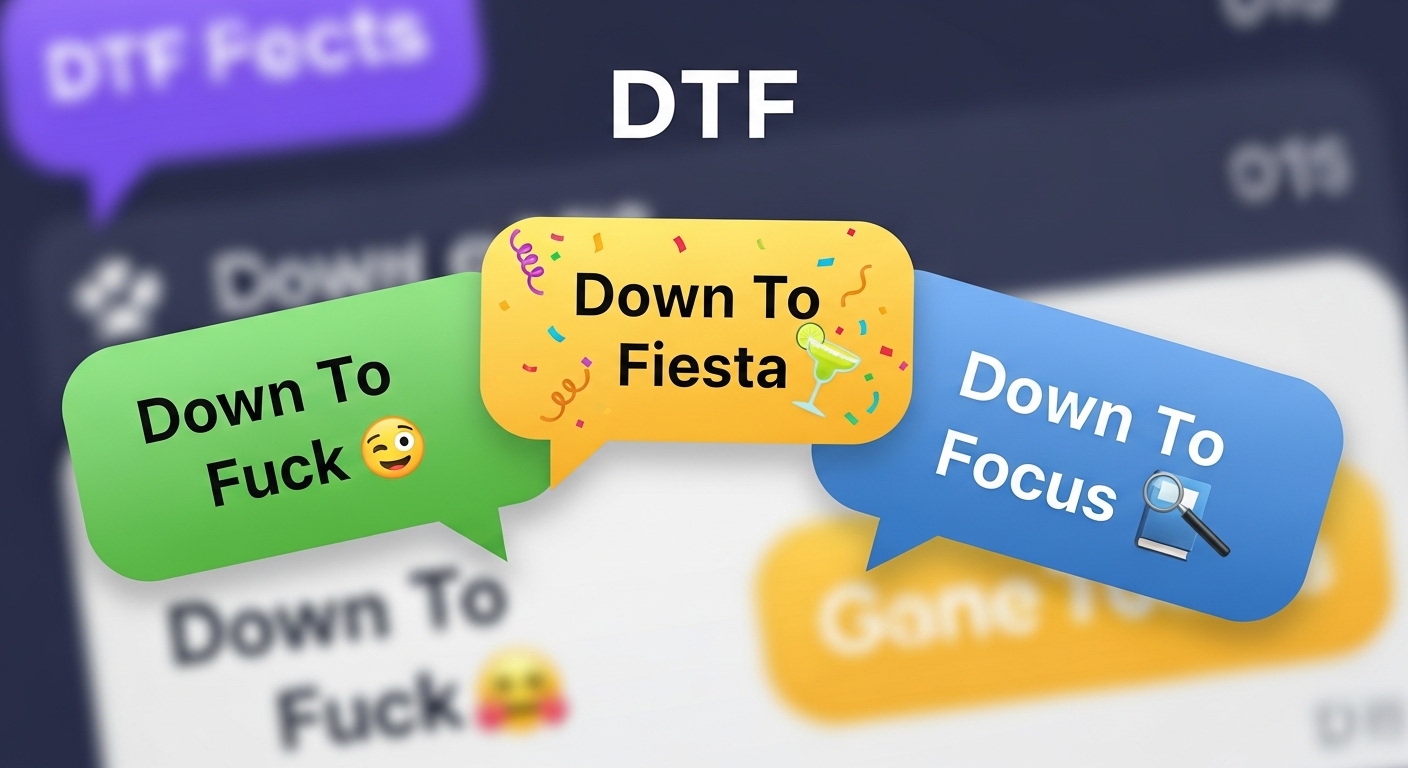

If you’ve been scrolling through social media, texting friends, or exploring dating apps, you might have stumbled upon the abbreviation “DTF”.
For someone new to internet slang, these letters can be confusing or even a little intimidating. But don’t worry—this guide will break down what DTF means, where it comes from, and how people use it today. We’ll also give examples, explain tone, and discuss when it’s appropriate to use.
By the end of this article, you’ll have a clear understanding of DTF and feel confident spotting it in conversations or social media posts.
What Does DTF Mean?
In internet slang, DTF stands for “Down To… Fun”—well, more accurately, it often stands for “Down To F*”**.
Yes, it is a bit explicit, but context matters a lot. The abbreviation is used primarily to indicate that someone is open to casual sexual activity or flirting. Over time, some people have adapted it to be slightly less explicit, using phrases like “down to hang” or “down to fun” in casual conversation, especially in memes or joking contexts.
Basically, if someone says they are “DTF,” they are signaling interest in a casual encounter rather than a committed relationship.
Origins of DTF
DTF became widely recognized in the early 2000s, but it truly exploded with the rise of dating apps like Tinder, Grindr, and Bumble. Its popularity grew in pop culture thanks to movies, TV shows, and memes that featured characters openly using the term in humorous or frank ways.
- TV & Movies: Teen comedies and romantic films often referenced DTF, normalizing its use in young adult culture.
- Social Media & Memes: Platforms like Twitter, TikTok, and Instagram made DTF part of the casual online vocabulary, often in humorous or sarcastic posts.
Today, DTF is widely understood among younger audiences, though it’s still considered informal and adult-oriented.
How DTF Is Used in Texting and Social Media
DTF is mostly used in casual, informal settings. Let’s look at some examples.
Example 1: Dating Apps
Profile Bio: “Looking for fun. DTF 😉”
Meaning: This person is indicating they are open to casual encounters.
Example 2: Text Messages Between Friends
Friend 1: “Are you coming to the party tonight?”
Friend 2: “Maybe… depends if she’s DTF 😂”
Meaning: Here, the term is used in a joking context between friends to discuss someone’s possible interest.
Example 3: Social Media Comments
Post: “Just moved into my new apartment 😎”
Comment: “DTF?”
Meaning: The comment could be flirtatious, indicating interest, depending on the tone and relationship between the people involved.
Example 4: Casual or Joking Adaptation
Some people use DTF humorously to mean “down to fun” or “down to hang,” especially in memes.
Example Meme: “Me after finishing my homework: finally DTF—Dance, Tacos, Fun!”
This is a playful way to soften the meaning and make it socially acceptable in non-adult settings.
Understanding Tone and Context
DTF can have very different meanings depending on tone, emojis, and context.
- Serious/Flirty Tone: Indicates actual sexual interest.
- Joking/Funny Tone: Used in memes or playful texts to mean “down to hang out” or something lighthearted.
- Friendly/Neutral Tone: Can just show casual openness, not necessarily sexual.
Pro Tip: Emojis are key. A winking face, fire emoji, or tongue emoji can make the meaning clear. Without these cues, it can be misinterpreted.
DTF vs. Other Similar Slang
There are other abbreviations with a similar vibe or usage. Knowing these can help you understand online conversations better.
1. NSA – No Strings Attached
Indicates interest in casual encounters without emotional attachment. Often used in dating apps.
2. FWB – Friends With Benefits
Refers to a sexual relationship between friends without romantic commitment.
3. LTR – Long-Term Relationship
Opposite of DTF, indicating someone is looking for commitment.
4. Hookup
General term for casual sexual activity, often used interchangeably with DTF in informal contexts.
Understanding these related terms helps you grasp what someone is actually communicating online.
When to Use DTF
DTF is not for every situation. Here’s when it might be appropriate:
- Dating Apps: To communicate casual interest.
- Private Conversations: Between friends or people you trust and understand the tone.
- Humorous Contexts: In memes, jokes, or playful texts where sexual context is clear or intentionally funny.
Situations to Avoid:
- Work or professional chats
- Family conversations
- Serious or sensitive discussions
Using DTF in the wrong context can come off as rude or inappropriate.
Common Misunderstandings About DTF
- Assuming Everyone Knows It: Older adults or people not familiar with dating apps might not understand.
- Thinking It’s Always Serious: Sometimes it’s used jokingly in memes or social posts.
- Misreading Tone: Without emojis or context, it can be taken more seriously than intended.
Remember: slang is flexible, and digital communication often relies on shared understanding and context.
DTF in Pop Culture
Over the years, DTF has appeared in TV shows, movies, and music, often in ways that are humorous or exaggerated.
- Movies & TV Shows: Teen and adult comedies use DTF to create relatable dialogue.
- Music: Lyrics in pop or rap songs sometimes reference DTF in dating or casual relationship contexts.
- Memes: Many memes play on the ambiguity of DTF, especially the playful, non-sexual adaptations.
This pop culture presence helps explain why younger audiences understand and use it so readily.
Tips for Understanding DTF in Real Life
- Look at the context: Where was it posted, and who is it from?
- Check emojis: These often give clues about tone.
- Consider the relationship: Friends joking, strangers flirting, and public social media posts all change meaning.
- Don’t assume: If you’re unsure, it’s okay to ask for clarification.
Why DTF Became Popular
DTF works as slang because it’s:
- Short and quick: Easier to type than full phrases.
- Expressive: Clearly signals casual interest without a long explanation.
- Flexible: Can be serious or joking.
- Recognizable: Widely understood in online dating and meme culture.
These features make it perfect for fast-paced digital communication.
Alternatives to Using DTF
If you want to be playful or indicate interest without explicit language, consider:
- “Down to hang”
- “Up for fun”
- “Let’s chill”
- Using emojis to express interest without words
These can convey a similar vibe but are safer in casual or public settings.
Examples of Real Conversations Using DTF
Scenario 1: Dating App Chat
Person A: “Hey, I like your photos 😏”
Person B: “Thanks! Are you DTF?”
Person A: “Haha, maybe 😜”
Scenario 2: Meme or Joke
Text: “Finished all my chores. Finally DTF 🕺🍕”
Meaning: Playful and not sexual—refers to dance, pizza, and fun.
Scenario 3: Casual Friend Chat
Friend 1: “Going to the beach later”
Friend 2: “DTF? ☀️🏖️”
Meaning: Flirty invitation, depending on tone.
Key Takeaways
- DTF = Down To F* (main meaning)**, but can be jokingly adapted to mean “down to fun.”
- Tone matters: Emojis and context change meaning.
- Use carefully: Appropriate for dating apps, private chats, and memes; not for professional or family settings.
- Pop culture influence: TV, movies, music, and memes have normalized its use among younger audiences.
- Alternatives exist: Less explicit phrases can be used to convey casual interest or fun.
Final Thoughts
Understanding DTF helps you navigate online conversations, social media, and dating apps with confidence. While the term can be explicit, its flexible use in memes, jokes, and casual chats shows how slang evolves to suit different tones and audiences.
Next time you see “DTF,” you’ll know whether it’s serious, playful, or just part of a meme. With context, tone, and a few emojis, it becomes easy to read and respond naturally.
Slang like this is part of the ever-changing digital language. Learning it helps you communicate more effectively online and stay in tune with modern social interactions.
Now you can confidently spot DTF in texts, posts, or chats and know exactly what it’s all about.
Discover More Post
What Does GNG Mean in Text Real Meaning Examples 2026
What Does IKR Mean in Text Real Meaning Examples 2026