
If you’ve ever received a message that simply says “FYI,” you might have paused for a second and wondered what it actually means. Is it important? Is it serious? Are you supposed to reply?
Don’t worry—you’re not alone.
Texting and internet slang can feel confusing, especially when people use short forms without explaining them. But once you understand the meaning of “FYI,” you’ll start noticing it everywhere—and using it naturally yourself.
In this guide, we’ll break everything down in simple terms: what “FYI” means, how people use it in texts, how tone changes its meaning, and when you should or shouldn’t use it.
What Does FYI Mean in Text?
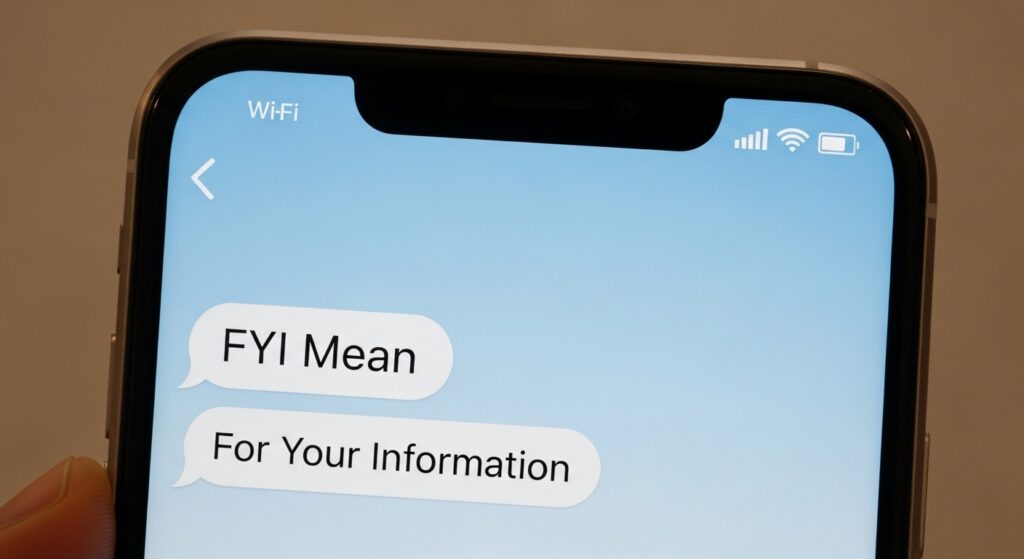
“FYI” stands for “For Your Information.”
It’s used to share information with someone—usually something they might find useful, interesting, or important.
Think of it as a polite way of saying:
- “Just so you know”
- “I thought you should know this”
- “Here’s some information for you”
It doesn’t always require a response. Sometimes it’s just informational.
Simple Explanation of FYI
At its core, “FYI” is not emotional—it’s informational.
When someone uses it, they’re not asking a question or starting a conversation. They’re simply giving you information.
For example:
“FYI, the meeting is at 3 PM.”
That means:
👉 “I’m letting you know the meeting time.”
No pressure, no drama—just information.
How FYI Is Used in Texting
Let’s look at some real-life examples so you can see how it works in everyday conversations.
Example 1: Sharing Useful Info
“FYI, the shop closes early today.”
👉 Meaning: Just letting you know so you’re aware.
Example 2: Giving a Reminder
“FYI, your assignment is due tomorrow.”
👉 Meaning: A helpful reminder, not necessarily a warning.
Example 3: Casual Information
“FYI, I already sent the email.”
👉 Meaning: Updating someone about something you did.
Example 4: Slightly Serious Tone
“FYI, this issue has been reported already.”
👉 Meaning: Informing someone, possibly to avoid repetition.
Does FYI Always Sound Polite?
Most of the time, yes—but not always.
“FYI” can sound:
- Polite
- Neutral
- Slightly cold
- Even passive-aggressive (in some situations)
It all depends on tone and context.
When FYI Sounds Friendly
When used with helpful intent, “FYI” feels polite and useful.
Example:
“FYI 😊 the restaurant we’re going to is cash only.”
👉 This sounds friendly and considerate.
When FYI Sounds Neutral
Sometimes it’s just straightforward information.
Example:
“FYI, I finished the report.”
👉 No emotion—just an update.
When FYI Can Sound Rude
In some cases, “FYI” can feel a bit sharp or passive-aggressive—especially if it’s correcting someone.
Example:
“FYI, I already told you that.”
👉 This might feel like:
- “You should have remembered”
- “You weren’t paying attention”
So tone matters a lot.
FYI Meaning on Social Media
While “FYI” is more common in texting and emails, it also appears on social media platforms.
On Instagram
People use it in captions or comments to add extra details.
Example:
“FYI, this place gets super crowded on weekends.”
On Twitter/X
Often used to share quick facts or updates.
Example:
“FYI: The app is down right now.”
On TikTok
Used in captions or comments to provide context.
Example:
“FYI this trend started last year”
Why Do People Use FYI Instead of Full Sentences?
Because it’s:
- Faster to type
- Widely understood
- Clear and direct
Instead of writing:
“Just so you know…”
People simply write:
“FYI”
It saves time and keeps messages short—perfect for today’s fast communication style.
Is FYI Formal or Informal?
“FYI” sits somewhere in the middle.
Informal Use
- Text messages
- Chats with friends
- Social media
Semi-Formal Use
- Work chats
- Emails
- Team communication
Not Ideal For
- Very formal writing
- Official documents
- Professional reports
In formal writing, it’s better to say “For your information” instead of “FYI.”
Common Variations of FYI
You might also see these variations:
FYI Only
Means the information doesn’t require action.
Example:
“FYI only, no need to reply.”
Just FYI
Adds a softer tone.
Example:
“Just FYI, I won’t be available tonight.”
FYI… (with dots)
Can sound more serious or dramatic depending on context.
How Tone Changes the Meaning of FYI
Tone can completely change how “FYI” feels.
Let’s compare:
“FYI 😊 the event starts at 6.”
👉 Friendly and helpful
“FYI, the event starts at 6.”
👉 Neutral
“FYI… the event started at 6.”
👉 Slightly annoyed or sarcastic
When Should You Use FYI?
Use “FYI” when you want to share information clearly and quickly.
Good Situations
- Giving updates
- Sharing reminders
- Passing along information
- Keeping someone informed
Situations to Avoid
Avoid using “FYI” when:
- Someone is upset or emotional
- You need to sound warm and supportive
- You’re writing something very formal
In emotional situations, “FYI” can feel too cold.
Real-Life Conversation Examples
Here are more natural examples so you can fully understand how people use it.
Scenario 1: Work Update
“FYI, the client approved the design.”
Scenario 2: Plans
“FYI, we’re meeting at 7 instead of 6.”
Scenario 3: Friendly Reminder
“Just FYI, your phone is in my bag.”
Scenario 4: Casual Chat
“FYI I finished that series you recommended”
Scenario 5: Helpful Info
“FYI this road is usually blocked in the evening”
How to Respond to FYI in Text
Sometimes you don’t need to reply at all.
But if you do, keep it simple:
Simple Responses
- “Got it”
- “Thanks”
- “Okay”
Friendly Responses
- “Thanks for letting me know 😊”
- “Appreciate it!”
When More Info Is Needed
- “Thanks, what time exactly?”
- “Got it, anything else I should know?”
Common Mistakes People Make
1. Using FYI in Emotional Situations
If someone is sharing feelings, “FYI” can sound cold.
2. Overusing It
Using “FYI” in every message can feel robotic.
3. Sounding Passive-Aggressive
Without the right tone, it can come off as rude.
FYI vs Similar Slang
Here are some similar expressions and how they differ:
BTW (By The Way)
Used to introduce extra or unrelated information.
IMO (In My Opinion)
Used to share personal views.
Note
More formal than FYI.
Heads up
A casual warning or alert.
Each phrase has its own tone, but “FYI” is more neutral and informational.
Why FYI Is Still Popular in 2026
Despite new slang appearing every year, “FYI” has stayed popular because:
- It’s simple
- It’s useful
- It works in both casual and semi-formal settings
Unlike trendy slang, it doesn’t feel outdated.
Cultural Impact of FYI
“FYI” reflects how communication has changed.
People today prefer:
- Short messages
- Quick updates
- Clear communication
Instead of long explanations, a simple “FYI” does the job.
Tips for Using FYI Naturally
If you want to sound natural, keep these tips in mind:
- Use it when sharing useful info
- Add emojis if you want a friendly tone
- Avoid using it in serious situations
- Keep your message clear and simple
Final Thoughts
“FYI” is one of the most useful and widely used abbreviations in texting. It stands for “For Your Information” and is mainly used to share updates, reminders, or helpful details.
While it usually sounds neutral or polite, tone and context can change how it feels. Adding emojis or softening words like “just” can make it friendlier.
If you’re new to internet slang, “FYI” is a great one to learn because it’s simple, practical, and used in everyday communication—both online and offline.
Now that you understand what it means and how to use it, you’ll feel more confident when you see “FYI” in messages—or when you use it yourself.
Discover More Post
Funny Clever and Sweet Berry Puns 2026 – Styled By Vibe –
What Does IKR Mean in Text Real Meaning Examples 2026