
If you’ve been texting friends or scrolling through social media and suddenly came across “YWA,” you might have paused and wondered what it means. Internet slang evolves so fast that keeping up can feel like a full-time job. Don’t worry—this guide will explain the meaning of “YWA,” how it’s used, and what it really conveys in a way that’s easy to understand.
We’ll break it down in simple language, show examples, and explain the tone behind it. By the end, you’ll feel confident spotting or even using “YWA” in chats, comments, or posts.
What Does YWA Mean in Text?
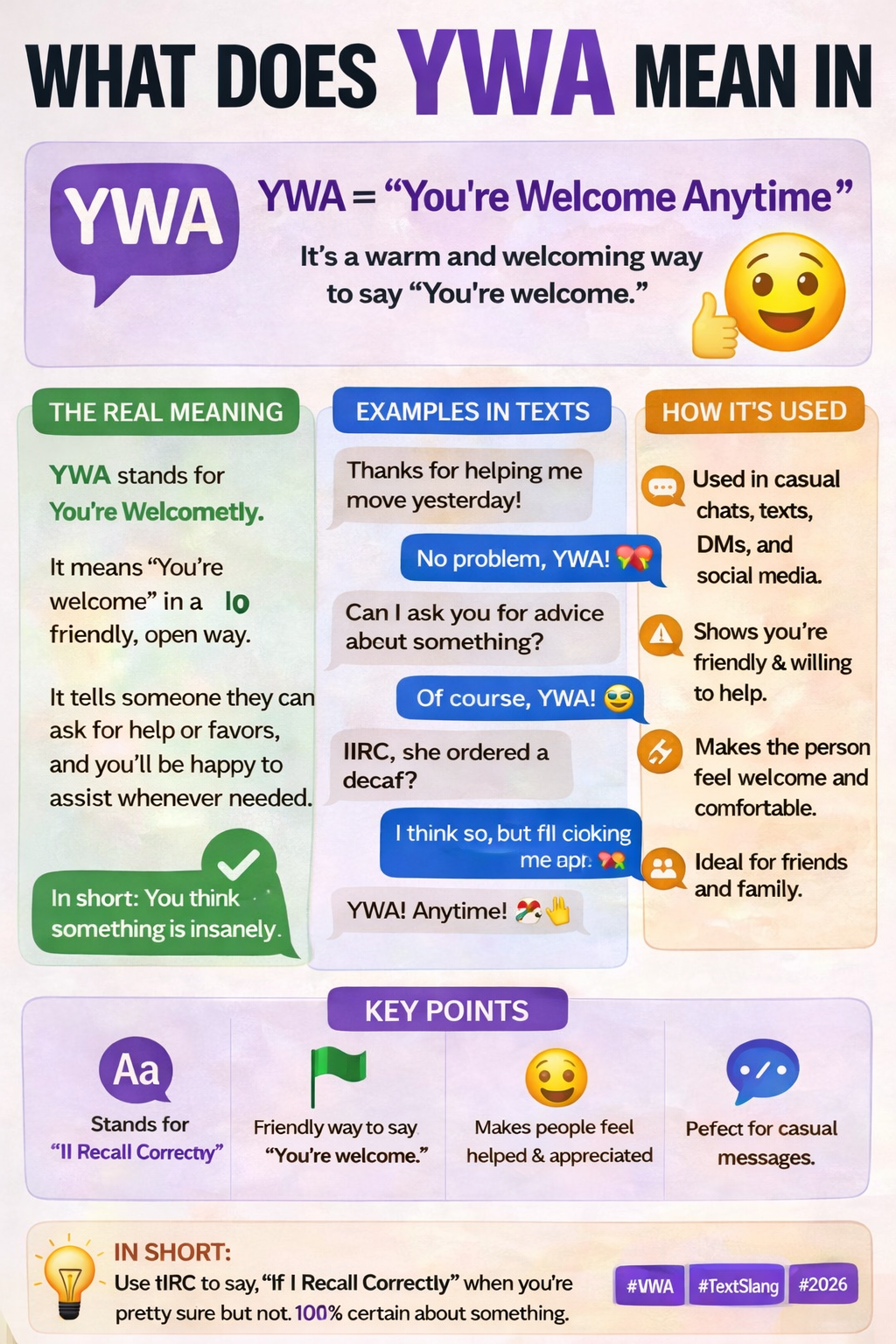
“YWA” is an abbreviation for “You’re welcome, again” or “You’re welcome always” depending on the context. More often, it’s just a casual, friendly way of saying “You’re welcome” after someone thanks you.
It’s common in texting, instant messaging apps, and social media comments. People use it when they want to be short, friendly, or playful, without writing out the full phrase.
Simple Explanation of YWA
At its core, “YWA” is simply a response to thanks. Think of it as a quicker, modern, internet-friendly way of acknowledging gratitude.
For example, if someone says, “Thanks for helping me with my homework,” you could reply:
- “YWA 😄” – casual and friendly
- “YWA, anytime!” – warm and welcoming
It’s not formal, but it’s perfect for digital conversations with friends, peers, or people you know casually.
How YWA Is Used in Texting
Let’s look at some realistic texting scenarios where “YWA” might appear.
Example 1: Casual Response
Friend: “Thanks for sending me that link.”
You: “YWA 👍”
Meaning: You’re acknowledging their thanks in a simple, casual way.
Example 2: Friendly Emphasis
Friend: “Thanks for covering my shift today!”
You: “YWA, anytime 😎”
Meaning: You’re not just saying “You’re welcome” but also implying you don’t mind helping.
Example 3: Quick Reply on Social Media
Comment: “Thanks for the tutorial!”
Reply: “YWA 💻”
Meaning: Short, clear, and casual acknowledgment.
Tone and Context of YWA
Like many abbreviations, tone is everything.
- Friendly tone: Adds warmth with emojis or extra words (“YWA 😊”)
- Playful tone: Can be slightly cheeky or teasing (“YWA, lucky you 😏”)
- Neutral tone: Straightforward acknowledgment without extra emotion (“YWA”)
Understanding context helps avoid misunderstandings, especially in texting where emojis and punctuation are key to showing tone.
YWA in Social Media
“YWA” is especially popular in platforms where brevity is valued:
On Instagram
Used in comments under posts, replies to DMs, or stories.
Example:
Post: “Thanks for the shoutout!”
Comment: “YWA 😄”
On TikTok
Seen in reply comments to tutorials, tips, or friendly advice.
Example:
Comment: “Thanks for the hacks!”
Reply: “YWA 💡”
On Snapchat
Used in private chats after someone expresses gratitude.
Example:
Friend: “Thanks for the selfie tip!”
You: “YWA 😎”
Why People Use YWA Instead of Writing Full Words
There are a few reasons abbreviations like “YWA” are so popular:
- Speed: Typing “YWA” is faster than writing “You’re welcome, again.”
- Casual style: Fits the tone of texting and social media
- Brevity: Short and to the point, perfect for small screens
- Trendy: Using abbreviations feels modern and relatable
Variations and Similar Abbreviations
“YWA” isn’t the only way people respond to thanks online. Here are some similar expressions:
- YW – Simply “You’re welcome”
- YWAA – “You’re welcome always again” (less common)
- No worries – Casual and friendly
- Anytime – Implies willingness to help in the future
- NP – Short for “No problem,” very common in texting
Each has its own nuance. “YW” is the most basic, while “YWA” feels slightly more playful or affectionate.
When Should You Use YWA?
“YWA” works best in informal situations. Here’s a breakdown:
Good Situations:
- Talking to friends or peers
- Replying to casual social media comments
- Chatting in messaging apps
- Reacting to small favors, tips, or advice
Situations to Avoid:
- Professional emails
- Formal communication
- Serious or sensitive conversations
Using it in the wrong context could come off as flippant or disrespectful.
Real-Life Examples
Here are some realistic examples to help you see “YWA” in action:
Scenario 1: School or College
Friend: “Thanks for sharing your notes!”
You: “YWA 😊”
Scenario 2: Work Chat
Colleague: “Thanks for the quick update.”
You: “YWA, happy to help 💼”
Scenario 3: Social Media Comment
Comment: “Thanks for the recipe!”
Reply: “YWA, enjoy 🍲”
Scenario 4: Gaming Chat
Player: “Thanks for covering me in that match!”
You: “YWA, got your back 🎮”
Scenario 5: Everyday Help
Friend: “Thanks for picking up my package.”
You: “YWA anytime 😎”
How to Respond When Someone Uses YWA
If someone says “YWA” to you, it’s simply their way of acknowledging your thanks. You can:
- Acknowledge lightly: “Thanks again 😄”
- Play along: “Appreciate it!”
- Move on casually: No response needed in some cases
The tone is usually friendly, so keep your reply relaxed.
Cultural Impact of Abbreviations Like YWA
Internet slang like “YWA” reflects a shift in communication:
- People prefer shorter messages
- Digital conversations rely heavily on context and tone
- Emojis and abbreviations help convey emotion quickly
These changes make communication faster, expressive, and often playful.
Tips for Using YWA Naturally
- Keep it casual: Perfect for texting or social media
- Add emojis: Helps convey tone
- Use it sparingly: Avoid overusing in every reply
- Match conversation vibe: Don’t use in serious or formal chats
Think of it as a fun, quick way to acknowledge thanks rather than a complete sentence.
Final Thoughts
“YWA” is a simple yet useful piece of modern internet slang. It’s a casual, friendly way to say “You’re welcome” without typing too much. Whether you’re responding to friends, commenting on social media, or chatting in messaging apps, it’s a flexible abbreviation that fits naturally in informal conversations.
Understanding context, tone, and emoji usage ensures that “YWA” comes across the way you intend—friendly, playful, or warm. Now, when you see it in texts, posts, or DMs, you’ll know exactly what it means and how to respond naturally.
Using “YWA” shows that you’re keeping up with online communication trends while staying friendly and approachable in your messages.
Discover More Post
What Does IKR Mean in Text Real Meaning Examples 2026
Monkey Jokes for Adults That Never Get Old 2026
Ultimate Collection of Pencil Puns in 2026 ✍️