
If you’ve been chatting online, scrolling through social media, or exploring forums, you might have come across the term “OC” and wondered what it really means. Internet slang can be confusing, especially since many abbreviations have multiple meanings depending on the context. Understanding these terms helps you join conversations confidently, avoid misunderstandings, and even sound a bit more in-the-know online.
In this guide, we’ll break down the meaning of “OC,” how it’s used in texting and online communities, and share real examples so you can understand it clearly. We’ll also explain the different contexts where “OC” appears, so you won’t be caught off guard.
What Does OC Mean?
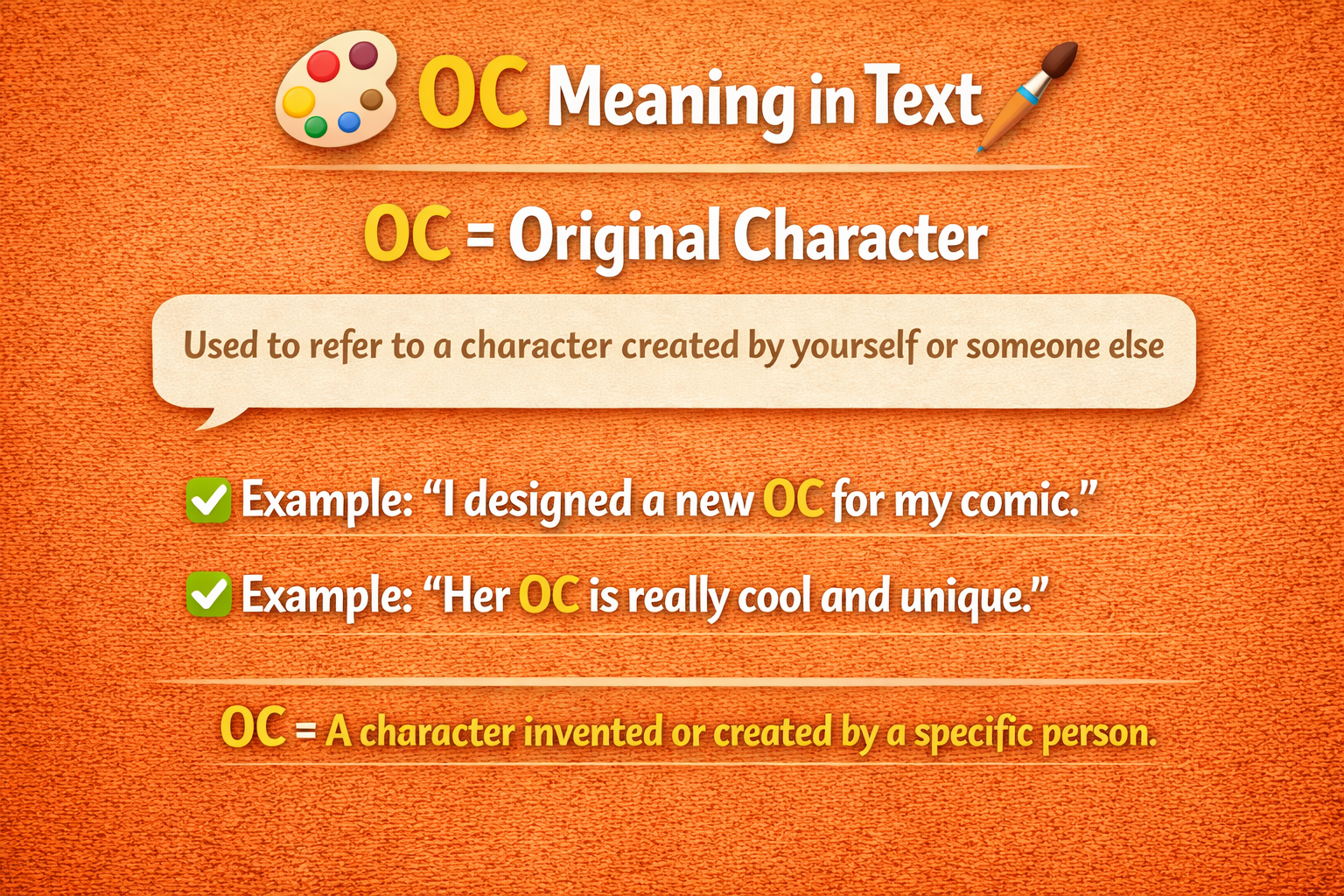
“OC” is an abbreviation that commonly stands for “Original Character.”
This term is especially popular in creative communities, fandoms, and social media platforms where people share art, stories, and roleplay content. When someone mentions an “OC,” they are usually talking about a character they created themselves, rather than a character from a show, movie, or book.
For example:
- “I drew my new OC today!”
- “This OC belongs to me, please don’t copy.”
The idea is that an OC is unique to the creator, representing their imagination, personality, or artistic style.
OC in Different Contexts
While “Original Character” is the most common meaning, “OC” can sometimes have other definitions depending on the community:
1. Creative and Fan Communities
In art, writing, and fandom spaces, “OC” almost always means Original Character. Fans often create OCs based on existing universes, like Harry Potter, Naruto, or Marvel, but the character itself is entirely new and made by them.
Example:
- “My OC is a wizard with a pet dragon. I drew them for my fanfiction.”
2. Other Meanings in Text
Outside of creative communities, “OC” can also appear in casual texting, sometimes meaning:
- Original Content – used when someone posts something they created themselves rather than sharing something from elsewhere.
- Orange County – usually in location-based conversations.
- Out of Character – often in roleplay or storytelling when a person speaks or acts differently than the persona they’re portraying.
Context is crucial here because the same letters can mean different things.
Why People Use OC Online
The term “OC” became popular because online communities thrive on creativity. People like to:
- Showcase their artistic or writing skills
- Share characters they’ve invented
- Join roleplay or storytelling games
- Connect with other fans or creators
Using “OC” makes communication shorter and easier, especially in fast-moving platforms like Twitter, TikTok, or Discord.
How to Recognize an OC
Here are some tips to know when someone is talking about an Original Character:
- They’re unique – The character isn’t from any official media.
- They’re self-created – Often accompanied by art, bios, or backstory.
- They’re tagged as OC – Many creators explicitly label their characters as OC to avoid confusion.
Example:
- “Here’s my OC: Zara, a time-traveling scientist 🧪 #OC”
OC in Roleplay
Roleplay communities, whether on Discord, forums, or social media, often use “OC” to identify characters. Here, it helps distinguish between:
- Canon characters – existing characters from media
- Original Characters (OC) – characters invented by the player
Example:
- Player 1: “I’ll play as Harry Potter.”
- Player 2: “I’m bringing my OC, a wizard from a new school!”
Using OC in this way helps prevent confusion and keeps conversations organized.
Examples of OC in Social Media
Social media has popularized OCs, and you’ll see them in posts, hashtags, and comments.
Instagram & Twitter
Artists and writers often post pictures or stories of their OCs. They might include hashtags like:
- #OC
- #OriginalCharacter
- #OCArt
Example:
- Post: “Finally finished drawing my OC, Luna the fox spirit! #OCArt”
TikTok
Creators often make videos introducing their OCs with background stories, personality traits, or special powers.
Example:
- “Meet my OC, Kairo, a cyberpunk detective living in the future city! #OC”
Discord
Roleplay servers and creative communities frequently label characters as OCs so everyone knows who is original and who is a canon character.
Common Questions About OC
1. Is OC Only for Art?
Not at all. While art is popular, OCs can exist in:
- Stories or fanfiction
- Roleplay games
- Comics
- Any creative content
2. Can I Share Someone Else’s OC?
No. OCs are personal creations, so sharing someone else’s character without permission is considered rude. Always credit the creator if you’re reposting or using their OC.
3. Can OCs Be Inspired by Existing Characters?
Yes! Many OCs are inspired by existing media but have their own unique traits, backstories, and personalities. Inspiration is fine; copying exact characters is not.
How to Create an OC
If you want to make your own OC, here are some steps:
- Decide the Type of Character – Human, animal, mythical, futuristic, etc.
- Give Them a Name – Something unique that fits their world.
- Design Their Appearance – Clothing, colors, features, etc.
- Develop Their Personality – Traits, likes, dislikes, habits.
- Create a Backstory – Where they come from, what they want, what challenges they face.
- Share and Label Them as OC – Make it clear they’re your original creation.
Why OC Matters in Online Communities
OC is more than just an abbreviation; it represents creativity, originality, and personal expression. In online spaces, using OCs allows people to:
- Showcase their imagination
- Build communities
- Roleplay and tell unique stories
- Connect with like-minded individuals
By labeling something as OC, creators claim ownership and invite others to appreciate or interact with their ideas.
How to Talk About OCs Naturally
When discussing OCs online, it helps to be respectful and clear. Here are some tips:
- Use proper hashtags when sharing on social media (#OC, #OriginalCharacter)
- Give credit to creators if you share or use their OC
- Avoid calling OCs “copied” unless you’re sure they aren’t original
- Comment positively on other people’s OCs to encourage creativity
OC in Everyday Texting
Although OC mostly appears in creative contexts, it sometimes shows up in casual texting:
- Out of Character – Often in gaming or storytelling:
- “OC: I’m just joking here, not in character!”
- Original Content – Referring to posts or messages you made yourself:
- “Here’s some OC for you to check out 😎”
Again, context matters. Look at the conversation before assuming the meaning.
Common Mistakes About OC
- Confusing OC with Canon Characters – Always check if the character is original.
- Assuming OC Is Negative – Being original is usually seen positively.
- Overusing OC in Posts – Use the label when needed; too much tagging can feel spammy.
Cultural Impact of OC
OC culture has grown alongside online fandoms. It has influenced:
- Art styles
- Storytelling trends
- Roleplay games
- Social media interactions
By creating OCs, people contribute to shared creative spaces while maintaining individuality. It also helps communities evolve with diverse ideas.
Real-Life Examples
Here’s how OCs might appear in different scenarios:
Art Community
- Post: “Check out my OC, a water elemental named Neri! #OCArt”
- Comment: “Wow, Neri looks amazing! Love the colors.”
Roleplay Server
- Player 1: “I’ll play as Sherlock Holmes.”
- Player 2: “My OC is a detective from the future. Can join your case?”
Fanfiction
- Writer: “My OC, Aria, will meet the main characters in chapter 3.”
- Reader: “Can’t wait to see how Aria fits in!”
Tips for Beginners
- Observe how OCs are shared online to understand the culture
- Don’t copy someone else’s OC; create your own
- Label your characters clearly as OC
- Be open to feedback but stay true to your vision
Final Thoughts
“OC” may seem confusing at first, but once you know it stands for Original Character, it becomes easy to recognize in any context. Whether you’re exploring art, writing, or roleplay, understanding OC allows you to join conversations, appreciate creativity, and maybe even create your own unique characters.
Remember, context is key. In creative spaces, OC usually refers to characters you invented yourself, but it can mean Out of Character or Original Content in other situations. By paying attention to the conversation and tone, you can use or understand OC confidently.
Next time you see “OC” in a text, tweet, or post, you’ll know it’s all about originality, creativity, and personal expression—something every online community values.
Discover More Post
What Does BDE Mean in Text Real Meaning Examples 2026
Clever Light Puns Puns That Make You Smile 2026