
If you’ve been scrolling through social media, reading group chats, or texting friends, you may have come across the abbreviation “TBF” and wondered what it actually means. Internet slang evolves fast, and it can be confusing to keep up with all the acronyms. Don’t worry—this guide will break it all down in simple, clear language, so even beginners can understand it.
We’ll explore the meaning of TBF, how people use it in texting and social media, examples of real-life conversations, and tips for using it naturally. By the end of this article, you’ll know exactly when and how to use it without sounding awkward or out of touch.
What Does TBF Mean in Text?
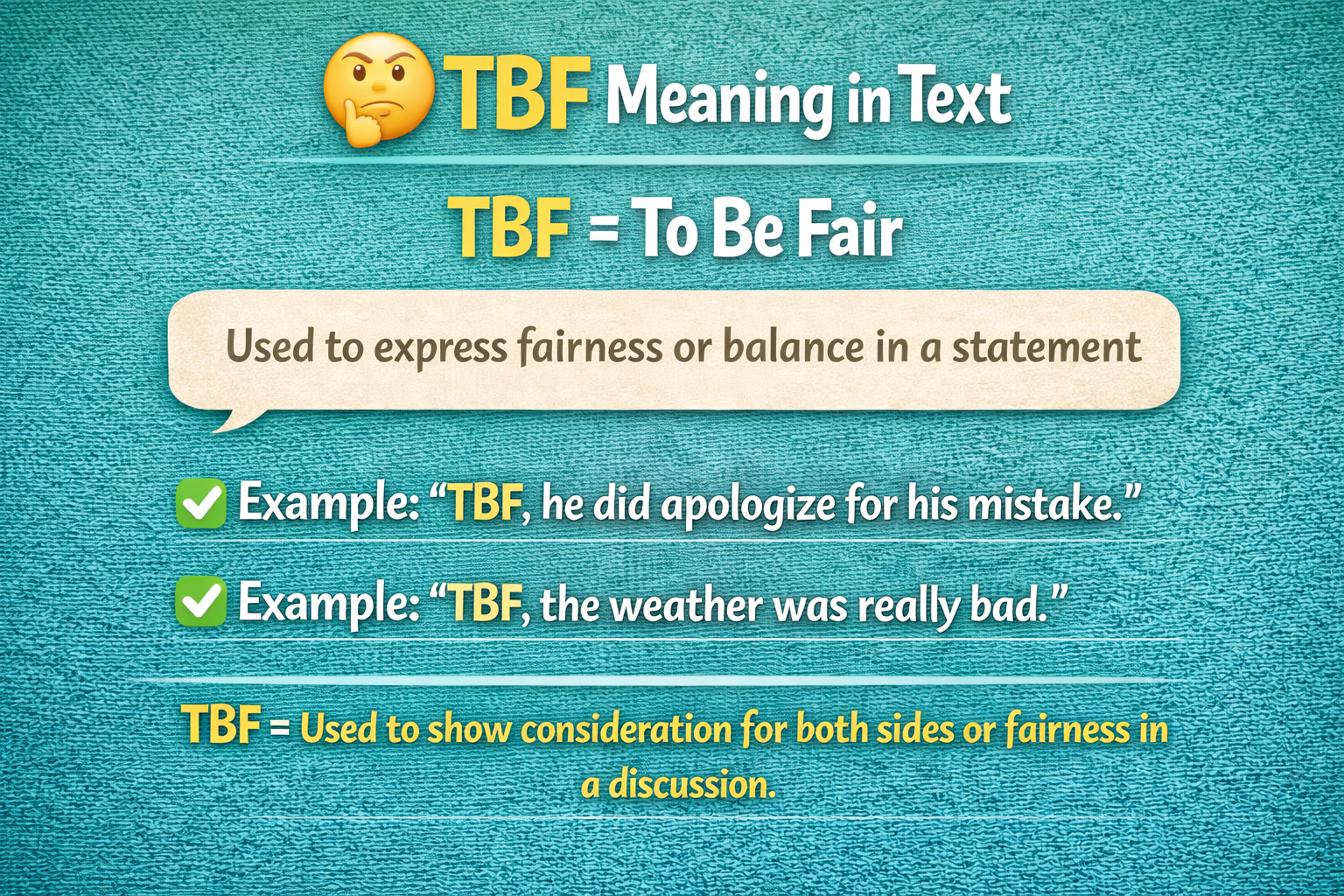
“TBF” stands for “To Be Fair.”
It’s a common phrase used in conversations—both online and offline—when someone wants to provide a balanced opinion, give context, or soften their statement. Essentially, it signals that the speaker is trying to be reasonable or fair about a situation.
For example, you might see it in texts, Twitter threads, Instagram captions, or TikTok comments. It’s a versatile abbreviation that fits many contexts.
Simple Explanation of TBF
When you use “TBF,” you’re usually doing one of three things:
- Acknowledging a point: You agree partially with someone.
Example: “TBF, he did try to help.” - Giving context: You explain something fairly.
Example: “TBF, it was really crowded that day.” - Softening a statement: You make a comment sound less harsh.
Example: “TBF, it wasn’t entirely your fault.”
In short, TBF makes your message sound more balanced and thoughtful. It’s not about agreeing 100%, but showing fairness or consideration.
How TBF Is Used in Texting
Let’s look at some practical examples of how “TBF” appears in conversations.
Example 1: Casual Chat
Friend: “I don’t like that movie at all.”
You: “TBF, the ending was kind of weak, but the acting was good.”
Here, you’re acknowledging your friend’s point while also adding your own perspective.
Example 2: Online Discussion
Comment on a post: “This game is overrated.”
Reply: “TBF, the graphics are amazing though.”
“TBF” softens your disagreement and makes your comment sound fair.
Example 3: Giving Honest Feedback
Friend: “I failed the exam.”
You: “TBF, it was a really tough test. Don’t stress too much.”
Here, you’re offering support while being realistic.
Example 4: Social Media Caption
“Just tried the new coffee shop. TBF, the latte wasn’t bad, but a bit pricey.”
In posts like this, “TBF” adds a conversational, honest tone.
Why People Use TBF Instead of Writing the Full Phrase
Internet slang is all about speed, convenience, and style. Typing “TBF” instead of “to be fair” saves time, especially in fast chats or social media comments.
Other reasons include:
- Conciseness: Shorter messages are easier to read.
- Casual tone: Abbreviations feel more relaxed and modern.
- Trendiness: Using common internet slang shows you’re familiar with online culture.
In many cases, TBF can replace “honestly,” “to be honest,” or “fairly speaking,” but it has its own nuance of neutrality and fairness.
TBF on Social Media
People use TBF in captions and comments to give balanced opinions.
Example:
“Loved the concert! TBF, the sound system could’ve been better.”
TikTok
In TikTok comments or video captions, TBF is often used to show a fair opinion about trends, challenges, or viral content.
Example:
“TBF, this dance trend is fun, but a bit hard to follow.”
Twitter/X
TBF is popular in Twitter threads where users share their thoughts on news, entertainment, or personal experiences.
Example:
“TBF, the movie had a weak plot, but the cinematography was stunning.”
Tone and Meaning of TBF
The meaning of TBF can change depending on tone and context.
- Neutral/Fair: “TBF, the store was packed, so the wait is understandable.”
- Slightly Defensive: “TBF, I did try to finish my work early.”
- Polite Disagreement: “TBF, I see your point, but I think it’s a bit different.”
Tone can be clarified with punctuation, emojis, and context, especially in text messages.
Variations and Similar Phrases
TBF isn’t the only way to express fairness or balance. Here are some similar expressions:
- TBH (To Be Honest): Focuses on honesty rather than fairness.
- IMO/IMHO (In My Opinion/In My Humble Opinion): Offers personal perspective.
- Frankly: A more formal way to introduce your opinion.
- Let’s be fair: Full phrase often used in spoken English.
While all these abbreviations are related, TBF specifically emphasizes balance and fairness, not just honesty.
Common Mistakes with TBF
1. Overusing It
Using TBF in every message can make you sound repetitive or insincere.
Wrong:
“TBF, I like pizza. TBF, I like movies. TBF, I like cats.”
Better:
“TBF, I like pizza, but I also enjoy trying new foods.”
2. Using TBF in Formal Writing
TBF is casual. Avoid using it in emails, reports, or professional documents.
Wrong:
“TBF, the quarterly report needs adjustments.”
Better:
“To be fair, the quarterly report requires some adjustments.”
3. Misunderstanding Tone
Without context or emojis, TBF can sometimes sound sarcastic or defensive. Always consider the message and relationship with the person you’re texting.
Real-Life Examples
Here are some realistic scenarios:
Scenario 1: Movies
Friend: “That movie was terrible.”
You: “TBF, the acting was really good.”
Scenario 2: Food
Friend: “This burger is overhyped.”
You: “TBF, it’s tasty but definitely overpriced.”
Scenario 3: Travel
Friend: “This beach is crowded.”
You: “TBF, it’s a popular spot, so that’s expected.”
Scenario 4: School/Work
Friend: “The assignment was unfair.”
You: “TBF, the instructions were clear, but it was tricky.”
How to Respond When Someone Uses TBF
If someone uses TBF in response to you, it’s usually to soften criticism or acknowledge fairness. Here’s how to reply:
- Agree: “Yeah, that’s true.”
- Add context: “TBF, I hadn’t considered that.”
- Playfully: “TBF, you’re not wrong 😄”
Keeping your reply casual and friendly works best.
Cultural Impact of Abbreviations Like TBF
Abbreviations like TBF show how digital communication has evolved. People value speed, clarity, and expressiveness. Texting slang allows users to convey opinions, tone, and emotions without lengthy explanations.
TBF specifically reflects a culture of fairness and balanced opinion in online conversations.
Tips for Using TBF Naturally
- Use it sparingly to keep your messages authentic.
- Pair it with emojis to clarify tone if needed.
- Make sure it fits the context of the conversation.
- Avoid using it in formal situations.
- Combine it with your own opinion to sound conversational.
Think of TBF as a tool to make your digital conversation more human and thoughtful.
TBF in Different Age Groups
- Teens and Young Adults: Commonly used in texts, chats, and social media.
- Millennials: Often used in social media captions or comments.
- Older Adults: Less frequent, but increasingly recognized due to social media exposure.
Is TBF Still Popular in 2026?
Yes. Even as new slang emerges, TBF has remained relevant because it’s simple, clear, and flexible. It’s useful for quick reactions, fair commentary, and conversational tone, which are all important in digital communication.
Final Thoughts
TBF, or “To Be Fair,” is a versatile and widely used abbreviation in texting and social media. It helps convey balanced opinions, soften statements, and add context to conversations.
Whether you’re replying to a friend’s story, commenting on a viral video, or chatting in a group, TBF can make your messages sound thoughtful, fair, and conversational.
Understanding its nuances—tone, context, and appropriate use—is key to using it naturally. With this knowledge, you’ll feel confident recognizing and using TBF in your digital conversations.
Now, the next time someone texts “TBF,” you’ll know exactly what they mean—and how to respond like a pro.
Discover More Post
Clever Art Puns That Make You Smile 2026 – Styled By Vibe –
Funny Baking Puns That Make You Laugh2026